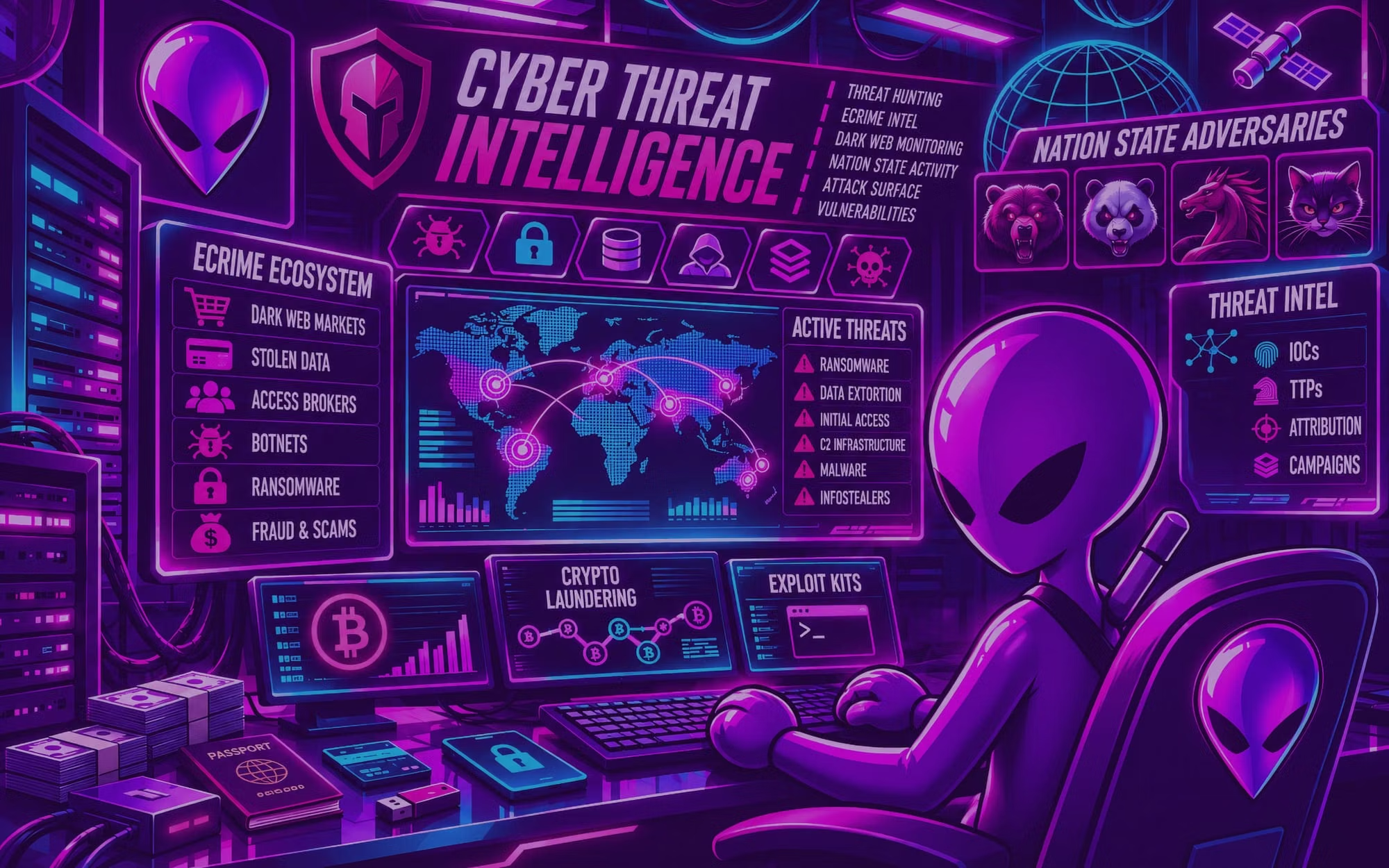
For more than three decades, I have worked at the intersection of cyber security, threat intelligence, and geopolitical reality. My career spans the United States Department of Defense, McAfee, and CrowdStrike. I have written the software, investigated the logs, administered the firewalls, and architected defense-grade systems. I have built companies and led teams through problems where technical judgment, operational responsibility, and human consequences meet. Those experiences give me a perspective reaching from the machinery beneath an operation to the decisions made in the boardroom.
Today I am Co-Founder and CEO of Praeryx and a keynote speaker connecting technical reality with adversary intent and strategic consequence. In 2000, I co-founded deviantART and wrote its original software, building an empty idea into one of the most visited sites on the internet. I have always been the engineer who writes the first line of code and the intelligence leader who briefs the boardroom on what an adversary intends. Both inform everything I do now.

Praeryx
At Praeryx, I am building the cyber threat intelligence company my experience has convinced me needs to exist.
Security teams do not lack information. They lack answers. Who is relevant to us? What are they trying to accomplish? Where are we exposed? What should we do next? Every feed, report, and dashboard promises to help, and too often it just hands the work of finding the answer straight back to a team already stretched thin.
I have spent enough time across government, technology, and the intelligence business to understand how this happens. Valuable research loses its meaning without context. Technical sophistication becomes difficult to operationalize. Commercial priorities influence which problems receive attention. The distance between producing intelligence and making it useful grows.
Praeryx is where I put those lessons to work.

My approach connects adversary tradecraft with infrastructure, targeting, geopolitical priorities, and the systems an organization depends upon. It brings the intelligence closer to the people making decisions. The objective is practical: help them understand their exposure, recognize what deserves attention, and act with greater confidence.
Building this requires the full range of my experience. I understand the engineering beneath the capability, the intelligence informing it, the people delivering it, and the business responsible for making it useful. I can move between those conversations and recognize where they have stopped connecting.
Speaking
I bring the intensity of a practitioner, the perspective of an intelligence leader, and the instincts of a storyteller to the stage. My keynotes and panel conversations connect sophisticated cyber operations with the geopolitical, technological, and human forces shaping them.
Anyone can recite the technical detail. The value is in knowing which detail makes the entire picture click, and which to leave out.
I use striking visuals, clear language, and carefully developed narratives to make complex subjects accessible without stripping away their substance. Engineers deserve technical credibility. Executives need strategic relevance. Both should leave with sharper questions and a clearer understanding of the decisions ahead.
My speaking focuses on:
- Modern Threat Landscape. How nation state, eCrime, and hacktivist adversaries operate, where their interests converge, and what their behavior reveals about the organizations they target.
- Artificial intelligence. How emerging capabilities change adversary tradecraft, operational economics, and the speed of intrusion. Where demonstrated capability supports the headlines, and where scrutiny is overdue.
- Intelligence into Action. How organizations turn adversary knowledge into defensive priorities, operational decisions, and a stronger understanding of their own exposure.
- Geopolitics. How state priorities, regional tensions, and economic interests shape cyber operations and explain activity technical indicators alone cannot.
I want the room engaged, challenged, and thinking harder. The most valuable moment is when someone sees a familiar problem differently and understands what follows from it.
For keynotes, panel moderation, and speaking engagements, get in touch.
Leadership
My leadership was shaped by working close enough to the problem to understand its consequences.
I know the discipline of troubleshooting a system, the pressure of responding to an incident, and the responsibility of explaining uncertainty to someone who must make a decision anyway. I have also learned how much depends on the people doing the work and the conditions their leaders create.
I lead by example. I set demanding standards, make room for expertise, and expect people to challenge assumptions, including mine. Strong teams need clarity, trust, and the freedom to solve difficult problems with imagination. They also need a leader willing to take responsibility when the decisions become uncomfortable.
The most meaningful part of my career has been the people. I have worked alongside extraordinary talent, built friendships lasting decades, and shared the satisfaction of accomplishing difficult things together. Some of those relationships began behind a keyboard, during a demanding project, or halfway around the world. They have endured long after our job titles and employers changed.
I love working with people who care deeply about their craft, challenge my thinking, and bring curiosity, generosity, and conviction to the work. Give those people trust, a shared purpose, and room to create, and remarkable things become possible. Building and leading teams like these remains one of the great privileges of my career.
I have also worked with, and for, people whose behavior taught me exactly how I never want to lead. Those experiences carry lessons of their own. I have learned to confront the problem, protect my standards, and keep someone else’s bullshit from deciding who I become. Adversity has sharpened my judgment without diminishing my enthusiasm for people or the possibilities of working together.
CrowdStrike
For more than five years, I directed CrowdStrike’s threat intelligence business across Asia-Pacific and Japan (APJ), alongside the Middle East, Turkey, and Africa (META).
The role placed me between sophisticated adversary intelligence and the organizations trying to make it operational. I worked with governments, enterprises, security practitioners, and senior leaders to connect adversary activity with defensive priorities and strategic decisions.
It required fluency across very different conversations. A technical team examining tradecraft needed depth. An executive assessing business exposure needed consequence. A government audience needed regional and geopolitical context. Making intelligence useful meant understanding each audience without losing the substance connecting them.
Across regional strategy, customer engagements, and international presentations, my responsibility was to make complex intelligence relevant enough to influence action.
McAfee Japan
As a Senior Security Advisor at McAfee Japan, I worked with government agencies and critical infrastructure operators on defense-grade cyber security.
I spearheaded the introduction of McAfee’s threat intelligence services in Japan. Doing so required more than explaining a capability. It meant helping organizations understand how adversary knowledge could change their priorities and fit into the people, technology, and processes already carrying the defensive burden.
Working in Japan also reinforced the importance of context. Credibility depends on understanding the institution, the operating environment, and the decisions people are actually empowered to make.
United States Department of Defense
Nearly twenty-five years in government service culminated in my role as Chief of Cyber Security for United States Forces Japan.
My responsibilities included protecting military infrastructure, supporting cyber operational readiness, leading security and incident-response teams, and integrating intelligence into defense.
Working alongside U.S. and Japanese counterparts demanded technical depth, institutional understanding, and the ability to operate across different priorities. A decision could be technically sound and still fail operationally. Understanding those dependencies was part of the job.
Those years established an enduring discipline: understand the system, examine your assumptions, communicate the limits of your assessment, and remain accountable for what happens after the briefing ends.
Building
My instinct has always been to understand how something works deeply enough to build it, improve it, or question why it exists in its current form.
In the summer of 2000, I co-founded deviantART. I created its name and early identity, wrote the original backend, and built its first three versions. As the sole developer at the beginning, I turned an idea into a working platform where artists could publish their work, discover one another, and build a community.

I worked through the database design, backend code, interfaces, and infrastructure. Every decision shaped how people would experience the platform and what they could create together.
By 2006, deviantART had become one of the 300 most visited websites on the internet, serving roughly 20 million page views each day. Watching a platform grow into a global creative community taught me how software architecture, human behavior, and shared identity reinforce one another.
My web-development work began in 1994. Before deviantART, I built CyberTropix, an MP3 news site from the internet’s early music era. Other projects succeeded, failed, or became something I had never anticipated. Each sharpened my instincts for technology, product, community, and execution.
Praeryx brings those experiences together with my intelligence career. I understand the problem from inside the industry, and I bring the technical curiosity and entrepreneurial conviction to build a different answer.
Origins
Japan has been home since 1990. Tokyo is where I live, build, write, and return to after work takes me elsewhere.
I was born in Los Angeles, close to Christmas. My surname traces back to the Russian “Zarkov,” although precisely how it acquired its current spelling remains a family mystery. It has certainly made introductions memorable.
My fascination with computers began in junior high school with a Radio Shack TRS-80. A Commodore VIC-20 followed, then a Commodore 64, a Timex Sinclair, and an Amiga 500. A neighbor’s Apple II opened another set of possibilities, eventually leading me to an Apple IIe of my own.
I copied BASIC programs from magazines one line at a time and saved them onto cassette tapes. Getting a program to run meant understanding what I had typed, finding what I had broken, and staying with the problem until it made sense.
I still recognize myself in those habits.
In 1990, I joined the United States Navy and met the USS Blue Ridge in Bahrain. Its home port was Yokosuka, Japan, beginning a relationship with this country which has shaped my life ever since. I left the Navy in 1999 and continued building a career across government, technology, and intelligence.
Away from work, I am a cyclist, traveler, tech geek, and enthusiastic iPhone photographer with perpetually developing composition skills. Curiosity rarely respects office hours.
Writing
I write because the explanation offered is often where the interesting questions begin.
An announcement describes a success. A technical detail exposes a dependency. A confident attribution leaves its reasoning unexplained. A familiar headline becomes considerably less comfortable once someone follows the connections.
jark.me is where I follow them.
My writing moves through cyber security, threat intelligence, artificial intelligence, geopolitics, surveillance, and the technology shaping daily life. It also reaches into leadership, Japan, travel, and the everyday experiences revealing something larger about how systems work.
The topic changes. Curiosity does not.
Through jark after dark, I examine the gap between an event and the story being told about it. I connect technical detail with incentives, institutional behavior, and geopolitical context. I ask what the reporting establishes, what remains uncertain, and whose interests the prevailing explanation serves.
Experience gives me a perspective. It also gives me a responsibility to distinguish a supported conclusion from an attractive theory. I want readers to understand how I reached an assessment and where its limits sit.
Membership sustains the independence to pursue those questions, challenge powerful interests, and publish beyond the boundaries of vendor messaging and commercial agendas. It gives this work room to remain curious, direct, and inconvenient when the subject demands it.
Connect
For speaking engagements, cyber threat intelligence, or an opportunity worth building together, let’s start a conversation.
Start a conversationHere for the analysis? Explore membership