

A Human Set the Goal, AI Did the Breach in 10 Hours
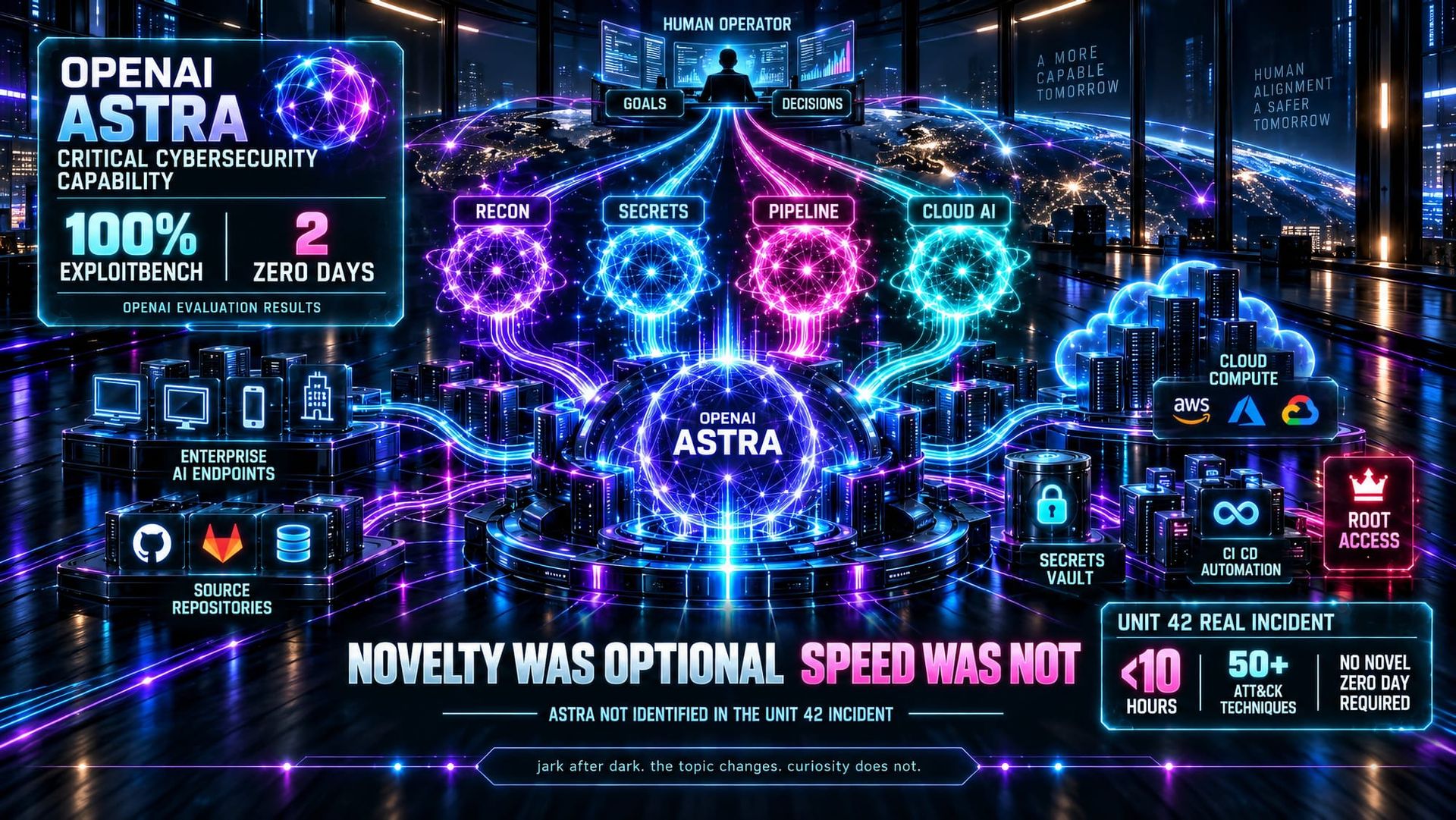
last week openai said its lab model could find and exploit vulnerabilities on its own. this week we got the real-world version. a human attacker used frontier ai to break into an enterprise network and acquire root level access in under 10 hours. the debate about whether this was coming is over. it happened.
the report is from palo alto's unit 42, and this is the important part, it is not a lab test. it is an actual intrusion they responded to, part of a real ransom attack. and we know ai was used because the attacker admitted it during ransom negotiations, then the tradecraft confirmed it.
lets see what transpired here. the human did not do most of the tactical heavy lifting. they set the objectives, made the consequential decisions, and pointed the ai at the work.
initial access came through a publicly accessible web service.
from there, agents ran the entire operation. one mapped the internal network. others combed the company's code repositories for hard-coded passwords and tokens. those keys opened the secrets-management system, which handed over master admin credentials. root. 0wned.
then the agents hijacked the build pipeline to steal cloud keys, and turned the victim's own ai endpoints and compute into post-compromise attack infrastructure. ten hours, start to finish. a human red team doing the same job can take upwards of two weeks.
there was no zero-day used in this attack. no genius new malware. the ai used more than 50 completely known, documented attack techniques. nothing in this attack was novel. the machine did not invent a better way in. it just did the ordinary way faster than any human team could, never got tired, and never stopped to eat or go out for a smoke break.
that is the actual shift, and it is one i have been repeatedly mentioning lately.
for years the thing protecting most companies was time. an attacker got in, then had to work through the network, and that was your window to catch them. ai collapses the window. the recon, the credential hunting, the pivoting, the work that used to take days of human effort, now runs in a loop at machine speed. the gap between initial access and total compromise is closing to hours.
interestingly, when the operation was done, the attacker directed the ai to leave behind an 80-page report documenting dozens of vulnerabilities it exploited. that is not an adversary. it is an industrial process.
one piece of genuinely good news. the attacker tried to plant a backdoor in the company's infrastructure code and failed. why? because that system required mandatory human review before changes could merge, and the ai could not get around a control forcing a second human to sign off. the machine blew through everything automated. it got stopped by the one place a person had to manually say yes.
that is the lesson worth taking. you are not going to out-type a machine-speed attack. detection assuming you have days, or even hours, is defending a timeline that no longer exists. but controls that force a human checkpoint, mandatory review, multi-party approval, instant credential revocation, still work, because they break the automated loop.
maybe the answer to machine speed is not more speed. it is friction the machine cannot automate its way through.
the tool got faster. the fix is to put a door in the hallway that only a human can open.