

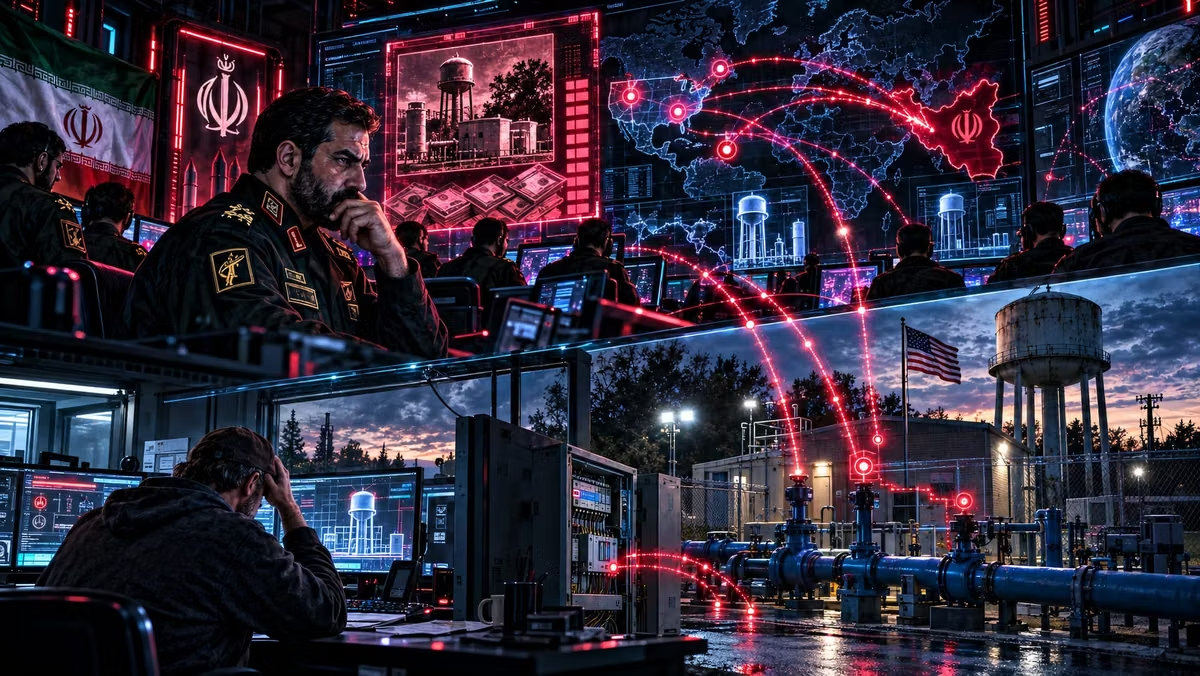
The US just put a US$10 million bounty on a man it will never catch, and everyone involved in this “national security theater” knows it. The real question is not whether anyone collects it, but why the hell it is being done at all.
The State Department is offering up to US$10 million for information leading to Amir Yaryab, a senior commander in the cyber command of the Iranian Revolutionary Guard. Yaryab allegedly directs the cyber operations hitting critical infrastructure across the US, Europe, and the Middle East, including energy, finance, telecom, and water.
The people under Yaryab include CyberAv3ngers, the threat actor behind multiple attacks on water-utility control systems. CyberAv3ngers hit small, underfunded water systems in at least 12 US states, because those utilities are high-value targets with almost no budget to defend themselves.
The US named the man it believes is running the campaign and put a price on his proverbial head. Sounds like a tough stance, right?
Now look at what the bounty can actually accomplish. Yaryab is a serving officer of the Iranian state. He sits inside Iran, protected by the regime he works for. Nobody is walking Yaryab across a border for a reward. This money is never getting paid, and the State Department knows it better than anyone.
So what is a theatrical reward on an untouchable man actually for? It is what a government reaches for when it has run out of ideas but still feels a peculiar desire to pound its chest.
To be fair, there is a potential intelligence angle to these shenanigans. Somebody inside his orbit might trade an alias, infrastructure, travel data, or details about the people working beneath him for a life-changing amount of money. Doubtful, but possible.
None of it changes the absurd asymmetry. Washington is offering eight figures for information about the man attacking US critical infrastructure, while many of the systems he allegedly targets remain embarrassingly easy to compromise.
The US has spent three years on this. Sanctions on Iranian cyber personnel. Indictments. Treasury designations. Public advisories. Through all of it, the attacks on the water systems kept coming, and the threat actors kept operating.
This bounty is not the next escalation. It is what is left after the escalations did not work. The US government is opting to get loud rather than be diplomatic, which is wholly on-brand for this administration.
This is a superpower announcing, with a dollar figure and a press release, it has identified exactly who is attacking its water supply and can do almost nothing to stop him. Naming him is not the same as reaching him. Putting a number on his head does not lower the risk to a single water treatment plant in a single one of those 12 states.
There is a real argument the bounty and public naming make things worse. Consider the incentives the US just created. Yaryab is a career officer whose entire standing inside the IRGC rests on being effective and being feared. Washington just told the world he is effective enough to warrant a US$10 million bounty, and feared enough to name personally.
For a man like Yaryab, that is not a deterrent. It is a credential and a motivation.
The worst thing a commander just branded America’s most wanted cyber officer can do is go quiet and look deterred. The pressure now runs the other way, to prove the bounty was justified. Do not be surprised if the response to naming him is more activity against US critical infrastructure, not less. Iran has shown no penchant for backing down in its recent kinetic clashes with the US, and this nonsense will hardly decrease its offensive cyber operations.
The US$10 million does not buy much. It does not patch a vulnerable programmable logic controller at a rural utility. It does not fund the one overworked OT or IT person defending the water system of a town. It does not do the boring, unglamorous, actually effective work of hardening the infrastructure that keeps getting hit. A bounty is loud and cheap. Defending the utilities is quiet and expensive. The US apparently prefers the loud, cheap option.
This is not a warning shot, and not a strategy. It is a substitute for one.
The target is a person the US cannot touch. His teams have been attacking systems the US has not bothered to properly defend. The response is a lame reward nobody will ever claim, and naming an adversary only works when the name costs it something.
The bounty will expire uncollected. The water systems will remain exposed. And the man with a US$10 million price on his head will most likely read about it, shrug, and go back to work terrifying the US utility sector.