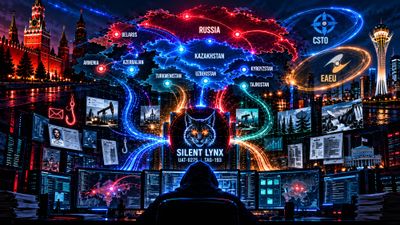

Berlin Won't Pay VICE SPIDER and Here Is Why It Changes Nothing
berlin state government just told a ransomware crew to pound sand. the state government confirmed it is being extorted after a breach of its administrative network, and said it will not pay. good. but saying no is the easy part. living with what comes next may be the hard part.
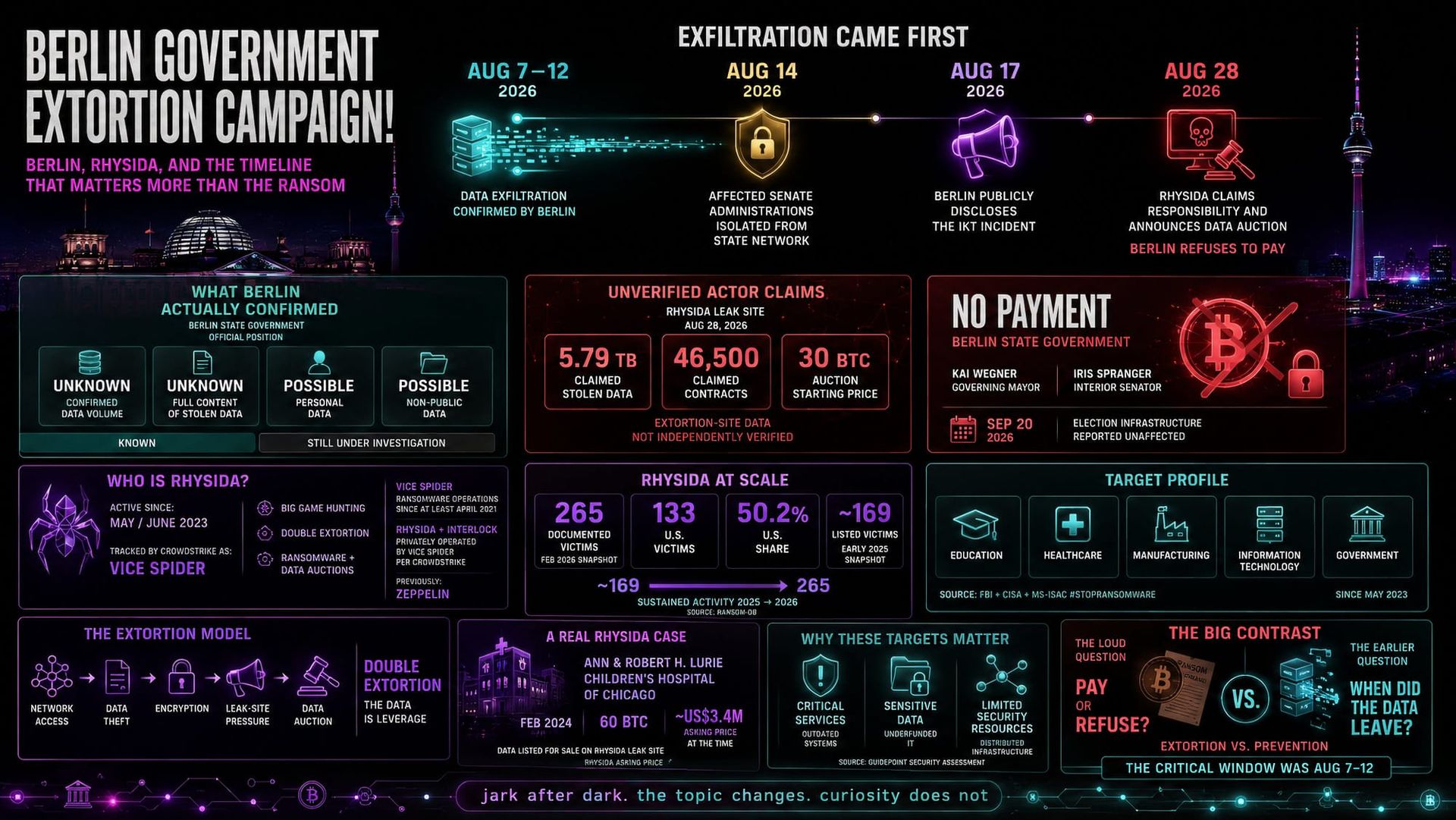
the group is VICE SPIDER, the threat actor responsible for the rhysida and interlock ransomware. an established double-extortion operation, flagged by the fbi and cisa back in 2023. VICE SPIDER has a long history of hitting hospitals and government bodies. they breached berlin's network, stole data, and are now threatening to publish it unless they get paid. classic extortion campaign. prey on the fear that releasing the data exposes something highly sensitive, the kind triggering lawsuits and regulatory pain.
the timeline matters. a senate department flagged an internal data outflow on august 7. the confirmed exfiltration ran august 7 to 12. the department was not cut off from the network until august 14. berlin did not publicly disclose this intrusion until august 17. so the data was gone a week before the plug was pulled, and the public heard about it ten days after it started. that gap is where the damage lives.
the important part is a discipline point. there are two sets of numbers in this story, and only one of them is trustworthy. berlin, officially, has published no figure for how much data was stolen. they will only say personal and non-public data cannot be ruled out. that is the honest number. we do not know yet.
the other set comes from VICE SPIDER themselves. their leak-site post claims 5.79TB, 1.44 million files, tens of thousands of contracts, financial records, passwords in plaintext. it reads precise and quite terrifying.
it is also a sales pitch. attackers itemize their haul to maximize pressure and drive the auction they have already announced. treat their inventory as marketing until someone independent confirms it. the scary breakdown is the extortion, not the evidence.
so why refuse? because the math on paying is worse than it looks. a decryption key or a delete-your-data promise is a promise from a criminal running an extortion campaign. paying does not guarantee the data stays private, and it funds the next hit on the next hospital or city. berlin doing this publicly, weeks before a september 20 election, is quite the ballsy move. the politically easy move is to pay quietly and make it disappear. but they opted not to take the easy route.
here is the trap in the whole ransomware debate, which berlin is standing smack dab in the middle of right now. refusing to pay is the right call and it does not save you. the data is already gone. saying no just means you have chosen to live with the exposure instead of funding further ecrime attacks. unfortunately there is no clean option present here. there is only the honorable hard one and the corrosive easy one.
the real lesson is upstream of the ransom note. this was decided in the week the data walked out and nobody stopped it.
by the time you are choosing whether to pay, you have already lost the thing worth protecting. the payment question is loud.
the failure that mattered was quiet, and it happened a week earlier.