
China Paid UK Academics to Build Its Spy Tradecraft
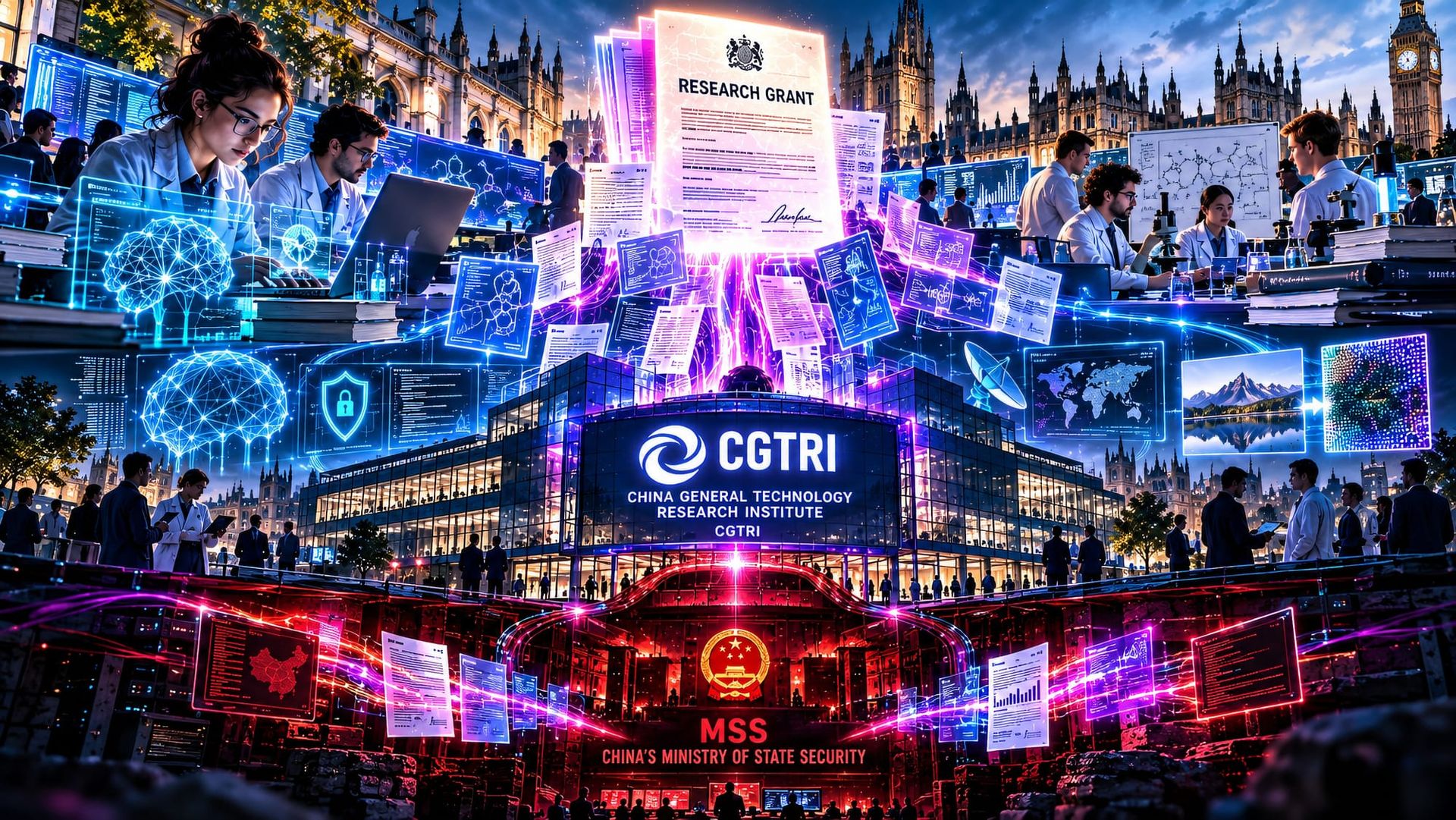
on september 30, mi5 issued a formal espionage alert about a chinese organization called the china general technology research institute (cgtri). there was no breach to report. no malware, no exploit, no stolen database. this was not your fathers cyber attack.
mi5 assesses the institute has very strong ties to china's ministry of state security (mss), and says its primary purpose is to fund research directly improving the mss's technical capability for espionage. more than 100 uk-linked academics contributed to projects funded by the mss through cgtri, and some may not even have known cgtri was ultimately behind the work. the collection mechanism here was not some sophisticated piece of code. it was merely a grant.
mi5 rarely puts an organization's alleged links to chinese intelligence directly into the public domain like this, which is part of what makes the alert notable.
the research fields tell you the intent. ai sits squarely inside china's current five-year plan, but covert communications and steganography are considerably more revealing. those are not merely strategic technologies. they are intelligence tradecraft.
steganography is the craft of hiding information inside ordinary files, primarily image files like gif, jpg, and png. this is not a random spread of science. it is a shopping list for an intelligence service's own tradecraft.
like with pretty much every espionage-motivated attack from china, they did not need to steal this work. this time they commissioned it by paying for it openly through an intermediary with the appearance of a legitimate research organization. british academic expertise then helped develop exactly the capabilities a spy agency wants.
funding beats hacking for this kind of target, and the reasons are structural. a breach is loud, generally illegal, and leaves a trail of evidence that would likely point right back to the perpetrator. a research grant is much quieter, looks legally authentic, and leaves a paper trail reading as legitimate collaboration. the same capability can be acquired without deploying an implant, exploiting a server, or stealing a single document.
the target does the work willingly, to a high standard, and may even publish the findings. the operation can scale across more than a hundred academics without a single implant. the deniability is built in, because at the working level nothing looks clandestine. it is just research, openly funded through what appears to be a legitimate organization.
the only thing that needs hiding is who ultimately asked the question and who benefits from the answer. the research can be legitimate, the payment real, and the academics entirely in good faith. mi5 was explicit that some may not have known who ultimately benefited from their work. that was the point.
viewed through an intelligence lens, this is more than collection. the grant is technical tasking wearing academic clothes. the service identifies a capability it wants, converts that requirement into a research problem, and lets outside specialists solve it. instead of building every espionage capability internally, portions of the research and development can effectively be outsourced while the ultimate customer remains obscured.
that makes the output more consequential than a pile of academic papers. research into covert communications, cyber security, or steganography can eventually improve how the service conducts other operations. today's academic grant can become tomorrow's espionage tradecraft without the researcher ever being recruited as an intelligence source.
the intermediary matters as much as the money. an intelligence service does not want its own name sitting on the grant application if another organization can create distance between the service and the researcher. the academic sees a research partner. the service sees an acquisition channel. espionage is defined by the objective, not by whether somebody had to break in.
the attack surface is the university itself, and everything that makes it good at its job. academia runs on open collaboration, international partnership, published results, and a permanent hunger for funding. those are virtues. they are also the exact conditions an intelligence-linked intermediary can exploit.
a lab under pressure to fund its work may not interrogate a generous research institute too harshly, especially one with a plausible name and a real-looking web site. the openness is the vulnerability, and you cannot patch it without breaking the thing that makes the research worth doing.
and the output does not have to be classified to be valuable. if you can steer world-class researchers toward a capability gap you already know you have, you have converted somebody else's expertise into your own technical development program without ever stealing a file. the intelligence gain can be in choosing the problem in the first place.
there is another advantage even if recruitment was never the objective. funding creates relationships, and relationships reveal who has expertise, who collaborates with whom, what projects are emerging, and where useful access might exist later.
mi5 has not said cgtri was recruiting these academics as agents, so there is no basis to claim that happened here. the point is narrower. sustained access to people, expertise, institutions, and professional networks has intelligence value even when nobody is formally recruited.
this is why this attack does not fit the usual security playbook. there is no cve, no indicator of compromise, no detection rule. the decisive control here is knowing who is really paying, and following the money back through the intermediary to the service behind it.
that is counter-intelligence work, not your average, everyday, run of the mill cyber security. mi5 did the one thing that actually counters this. it named the organization, so the next lab that gets the funding offer can recognize it. attribution is the patch here.
but attribution is also disruption. by naming cgtri publicly, mi5 effectively burned the intermediary. an organization that worked because researchers could plausibly treat it as an ordinary funding source now arrives carrying an intelligence-service warning label. the mss can build another intermediary, but rebuilding credibility, relationships, and access costs time.
the adversary in this story is not the hundred academics. they were unwitting targets in a china-based operation, doing real work for what looked like real money. the adversary is the service engineering a funding channel to turn their openness into capability development and collection.
china's embassy rejected the allegations as fabricated and said the academic cooperation was voluntary and lawful. but intent does not fully protect institutions now that mi5 has put the relationship into the public domain. it warned organizations continuing the collaboration about potential exposure under the national security act.
ignorance was the operation's fuel. after mi5's warning, continued ignorance becomes considerably harder to argue. that is another reason public attribution matters. it does not merely explain what happened yesterday. it changes the risk calculation for anyone approached tomorrow.
we spend enormous effort defending the network and almost none defending the funding. but research is just intelligence that has not been collected yet, and a grant may be one of the cheapest ways in the world to collect it or turn it into capability.
the hardest espionage to see is the kind where your own people do the work, publish the results, and thank the sponsor. china did not hack the research. it bought it. the mss did not need to recruit the source. it only needed to fund the question.
the cleanest spy operation is the one where the target sends you the invoice.