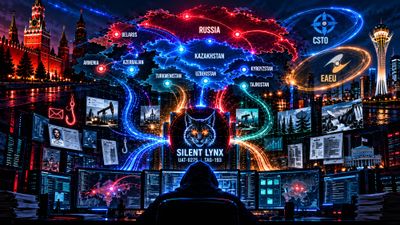

Encryption Was the Costume, Access Was the Objective
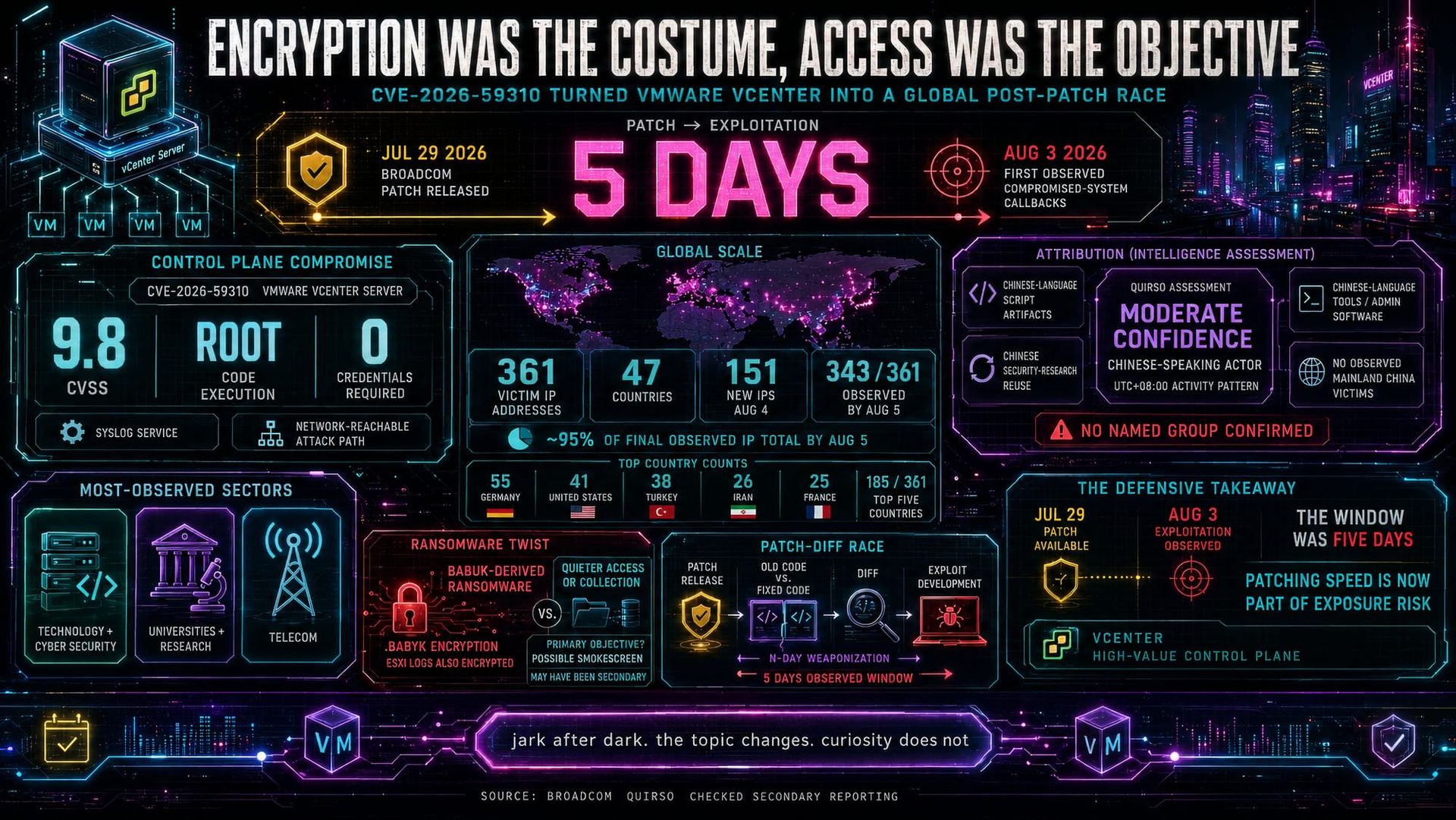
a critical hole in vmware vcenter was patched on july 29. by august 3, someone was already inside. five days from fix to exploitation, and the target was the management brain of thousands of corporate networks.
the flaw is CVE-2026-59310, rated 9.8 out of 10. it lives in vcenter's syslog server, the component collecting logs, and it turns a quiet logging service into an open door. an attacker on the network can walk through it and run code as root. no login. no credentials. no interaction. vcenter is not some edge box. it is the center of the universe for so many enterprise virtual environments, every vm, every host.
the speed is the first lesson. patched on a tuesday, exploited by the following sunday. and before anyone assumes that means a super-sophisticated actor, the researchers at quirso, the german ir firm that caught this, make a sharper point. a five-day turnaround does not require genius or insider knowledge. skilled actors routinely diff the patch, compare the fixed code to the old code, and reverse-engineer the exploit straight out of the fix itself.
patches are not just cures. they are also fairly detailed maps leading directly to the wound. disclosure was the starting gun, not a warning.
the scale is already global. quirso counted 361 victim ip addresses across 47 countries, driven by what they assess as a single actor. the most-hit sectors were technology and cyber security firms, then universities and research, then telecom. that victimology matters, and i will come back to it.
now attribution, and i am going to be precise about the confidence here. quirso assesses, with moderate confidence, this is a chinese-speaking actor working in the utc+08:00 time zone. moderate confidence. it has not been pinned to a named group, no famous panda, no apt number. it is a cluster of similar behavior, not a confirmed identity. treat this as a well-reasoned suspicion, not an hard verdict.
the reasoning is the interesting part for those who generally do not follow the boring analytical phase of threat intelligence. this is not glamorous work by any stretch of the imagination. quirso's analysis appears solid, and it is worth seeing how the puzzle pieces actually fit together.
chinese-language artifacts left in the attacker's own scripts. reuse of research from a chinese security publication. repeated use of chinese-language tools and admin software. working hours lining up with utc+08:00. the tell tying it all together is the victims are spread across 47 countries, but not a single mainland china firm was hit. none. actors tend not to hit targets in their own backyard. none of these clues proves anything alone. stacked together, they point in one direction.
now for the m night shyamalan plot twist. the intrusion ended in ransomware. the strain is derived from the leaked babuk code.
easy story to write, another ransomware crew. except quirso does not buy it. they assess the ransomware was likely not the point. it reads as a smokescreen, white noise dropped at the end to look like a payday, and bury what the actor was actually doing. generally, for nation state threat actors this means an espionage campaign of some sort. the loud crime hides the quiet one.
put the pieces together and the shape is familiar. a state-aligned adversary, moving fast on a freshly disclosed flaw, hitting technology and research and telecom across the world. careful to avoid its own country, and dressing the whole thing up as ransomware on the way out. the encryption is the costume. the access was the objective.
the practical part is simple and urgent. if you run vcenter and you have not applied the july 29 fix, you are late, and the exploitation has been global since early august.
the larger lesson is the one that keeps repeating. the patch that protects you also teaches your attacker how to hit you, and the gap between those two things is now measured in days. patch fast is no longer advice. it is the whole game.