Knowing About a Threat Is Not the Same as Stopping It
there is a comfortable oversimplification the threat intelligence industry tells both itself and its customers. if you know about a threat early enough, you have time to implement a mitigation and decrease the risk of a successful attack. in my experience, that framing sells cti wrong, and it sets up the exact failure ai is now exploiting.
let us start with what cti actually does, because the value is real and worth stating correctly. intelligence does not magically stop attacks. it lets you deploy measures to reduce the risk of a successful one. and it does that at three different levels. tactical, operational, and strategic. each one does a different job, for a different audience, on a different clock.
tactically, indicators of compromise feed automated security controls. a malicious domain goes into the web gateway for blocking. a bad hash enriches the siem so the next time it appears, it lights up an alert. an ip tied to a known adversary gets added to a watchlist.
this is the layer people picture when they hear "threat intelligence," and it is the layer that works best, because it is machine-speed and largely automated. the human is not in the loop for most of it. the indicator arrives, the tooling ingests it, the block happens. fast, clean, efficient, and primarily hands-off.
operationally, cti stops being a list and starts being a picture. it tells you which security controls need adjusting, adding, or removing based on how the threat is actually behaving and evolving. it tells you which threat actors have you in their sights now, and which ones may turn toward you later, based on your industry, your geography, or what you are worth to them.
it helps you understand the campaigns hitting companies looking like yours, so you can harden the specific paths those campaigns use before they reach you. this is where intelligence shapes decisions rather than just feeding machines. it is necessarily slower, because a human has to interpret it and cross-reference it against their own environment.
strategically, cti moves into the boardroom, and this is the layer everyone finds hardest. the strategic job is to arm leadership with a threat picture clear enough to make business decisions about risk, investment, exposure, and budget. more tooling. more people. more coverage.
and here is the part most technical people never learn. you cannot brief a board on security controls. deep technical framing is a non-starter in that room. it will get you thrown out. the conversation with senior leaders has to happen in their language. risk, reputation, legal, money, exposure, consequence. not packet captures and detection logic.
cti at this altitude is translation as much as analysis. get it right and the budget follows. get it wrong and the whole program starves regardless of how good the tactical layer is.
three altitudes. three kinds of value. three audiences. none of them "know it and you are safe."
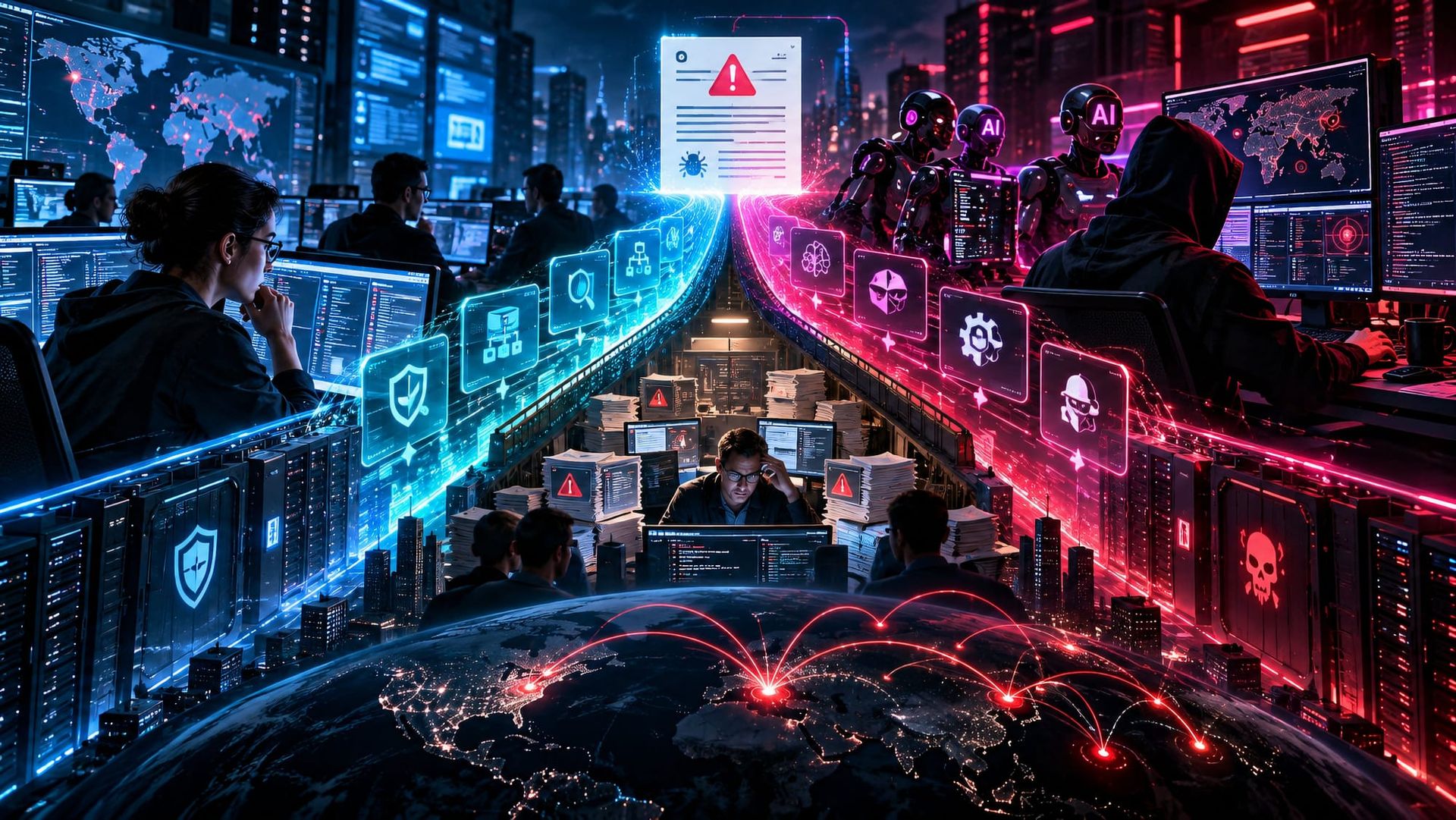
so where is the gap the industry keeps tripping over? it is not the tactical layer. iocs get automated, and that runs fine. the gap is one level up. it is the space between an early, high-value signal and a confirmed answer to a harder question. is this exploitable in my environment, right now, on my specific systems?
that question is not answered by a blocklist. a leaked credential in a criminal market, a fresh vulnerability advisory, these are not indicators you drop into a gateway. they are leads.
turning a lead into a decision takes something the automation cannot do. it requires someone with intimate knowledge of the environment. a skilled cti analyst who understands both intelligence and the actual security architecture, who can see the relationship between a given threat and the specific systems it would touch. or someone with the offensive skill to test whether the thing is genuinely weaponizable against you, and the time to run it down.
these people are scarce. that time is scarce. and the clock is running the whole way.
that validation step is where the risk quietly accumulates. not because nobody knew about the threat, but because knowing and proving are two different jobs. the signal arrived. confirming what it means for you, specifically, is the slow part.
for years, that was manageable, because the attacker faced the same clock. it took them real time and real skill to turn a disclosed vulnerability or a leaked credential into a working attack. while they did that work, you had a window to validate, prioritize, and mitigate. the window was your margin.
i have hammered this point recently, and here we are again. ai is compressing that window toward zero.
attackers now pair the same intelligence you are consuming but with ai-assisted exploitation. the advisory you have not finished validating may already be a working exploit in someone's kit. the credential you have not confirmed is being tested by a machine somewhere else. the bottleneck was never the tactical automation. it was the human-speed validation and decision step sitting above it, and that step is now racing a machine needing almost no time to work out what takes a person hours.
i have been openly critical of the cti industry, and this is the part it has to reckon with honestly. cti was always necessary and never sufficient on its own. it tells you where to look and what to prepare for. it does not, by itself, close the distance between a signal arriving and a defender acting on it.
for a long time that distance was tolerable, because the value of the intelligence covered for the lag in acting on it. ai broke that trade. the intelligence is as good as ever. the lag is now fatal.
one honest note on why this argument is landing on this particular day. the piece making the rounds is a contributed piece from pentera, a vendor selling automated security validation, built around its integration with recorded future. their answer to the gap is, conveniently, the product they sell. that does not make them wrong. the validation gap is real, and automating that step is a reasonable response. just read the diagnosis knowing the cure was written by the same people, the way you read any vendor's white paper. use your critical thinking skills.
so what is the actual lesson, stripped of the sales pitch? cti has three jobs, and done right it does all three well. it automates your tactical blocking. it tunes your operational controls. it arms your strategic budget conversations. what it has never done, and cannot do alone, is validate and act at machine speed. that was always a human step. ai just made the human step the slowest thing on the board.
the question that decides whether you get breached is no longer do you have the intelligence. you probably do. it is whether you can get from that intelligence to a decision faster than an adversary who already has the same intelligence and a machine to act on it.
the advantage no longer belongs to whoever knows first. it belongs to whoever can turn knowing into action first.
intelligence without execution is becoming a very expensive way to watch the breach arrive in real time.