

Revolut Says No One Demanded a Ransom, the Internet Disagrees
revolut says nobody claiming responsibility for its customer data breach has directly contacted the company or demanded a ransom. the threat actor allegedly responsible has seemingly decided direct contact was optional.
a couple of days ago, i wrote about how revolut handed sensitive customer data to someone making fraudulent requests through a legitimate government email domain. nobody broke into revolut. nobody exploited the bank. somebody asked for the information while posing as the government, and revolut handed it over.
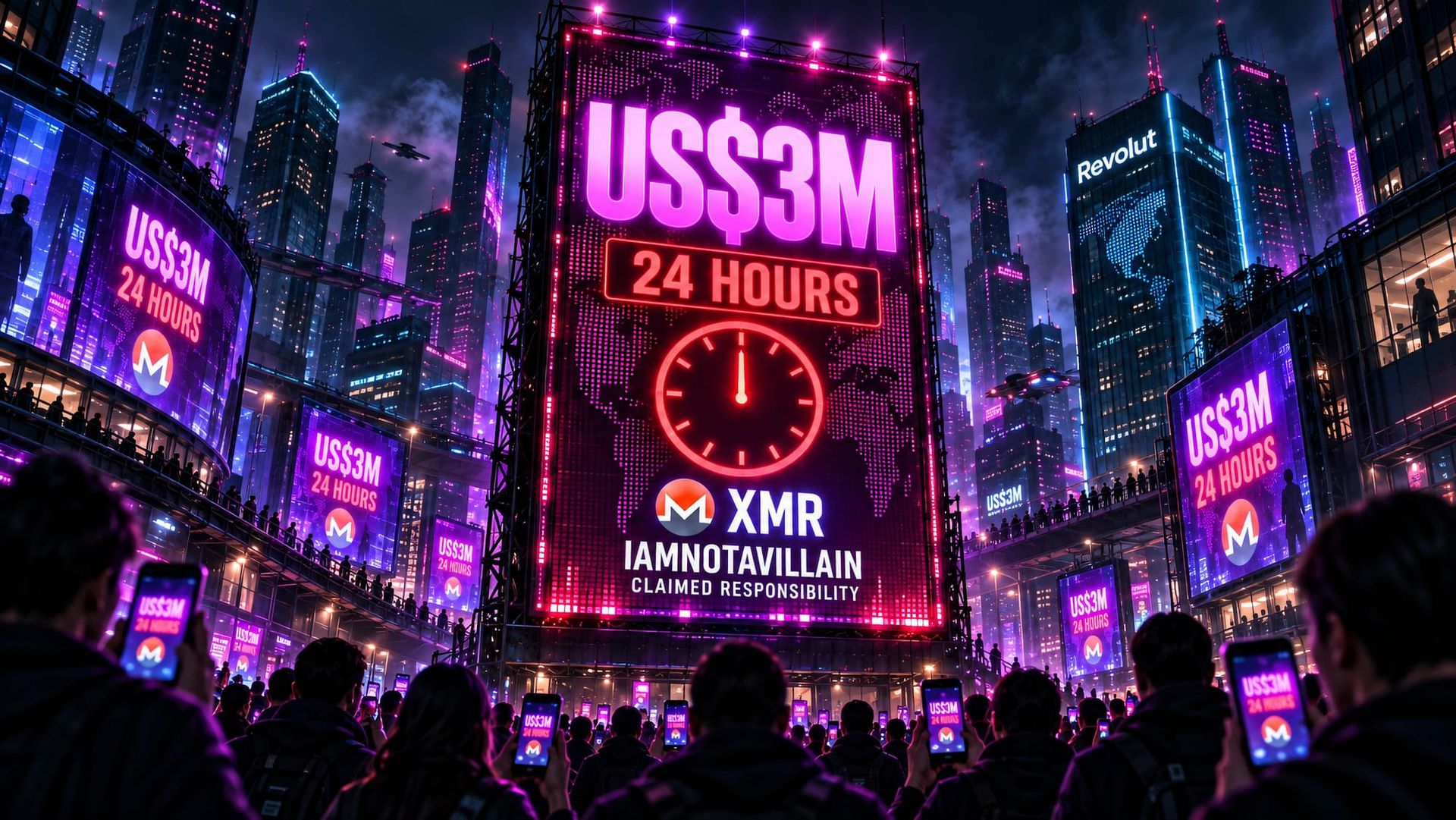
now the story has gotten considerably weirder. a group calling itself iamnotavillain has claimed responsibility for the breach. according to the financial times, the group publicly demanded US$3 million from revolut, payable in monero. revolut had 24 hours. if it did not pay, the group threatened to sell the customer records to other criminals.
there was even a countdown clock. revolut then said something interesting. the company told reuters it had received no direct contact or demand from the people claiming responsibility.
read that wording carefully. no direct contact.
the group apparently agrees. it told the financial times there had been no negotiations with revolut, and said this was the first time it had used its web site to make its demands publicly known. strangely enough, both sides appear to be telling compatible versions of the same story.
nobody privately sent revolut a ransom note. they published it for the entire world to see.
welcome to ecrime in 2026.
the distinction matters because we still tend to imagine digital extortion as a conversation. criminal contacts victim. criminal proves possession. criminal names a price. victim responds. negotiation begins. publication comes later if the victim refuses to cooperate.
this appears to reverse the order. the demand was public from the beginning. US$3 million. 24 hours. a countdown clock. pay, or the data gets sold. the pressure mechanism was not a private conversation between revolut and a criminal. it was everybody else watching.
public extortion itself is nothing new. ransomware crews have used dedicated leak sites for years, usually on the dark web. what is unusual here is the order. according to the financial times, the demand went public before there was any negotiation at all.
customers see the coverage. journalists report it. regulators notice it. social media amplifies it. suddenly the victim is under pressure whether anyone inside the company ever answered a message or not. the audience becomes part of the extortion mechanism.
this is where revolut's response gets interesting. saying there was no direct contact is relevant. it tells us there was ostensibly no private negotiation channel between revolut and iamnotavillain. but it does not make the public demand disappear. if somebody stands across the street from your house holding a giant sign saying give me US$3 million or i will sell all your belongings, saying nobody knocked on the door is technically useful information. it does not mean nobody demanded US$3 million.
there is another reason to be careful here. iamnotavillain is an ecrime threat actor making claims about what it possesses, what it did, and what it intends to do. a ransom page and a countdown clock do not independently prove every assertion sitting beside them. ecrime adversaries are notoriously loud, routinely boasting claims nobody has independently verified. publicity, fear, and urgency are part of the leverage.
revolut says its core infrastructure, databases, and customer accounts were not hacked. reporting puts the affected population at roughly 680 potentially targeted customers. revolut has confirmed the underlying disclosure of sensitive information after fraudulent requests arrived through a legitimate government agency email domain.
those are established facts. everything the criminals say beyond what can be independently corroborated should still be treated as an adversary claim.
the public extortion model itself is worth paying attention to. an attacker no longer necessarily needs to establish a private communications channel with a victim before applying pressure. publication can communicate the demand on its own. the victim does not even have to participate. that changes the geometry of extortion.
the traditional model has two participants. attacker and victim. the public model has an audience. and the audience may be the point.
revolut may be completely correct when it says nobody directly contacted the company demanding money. the people claiming responsibility apparently did not need to. they put the demand where everybody could see it.
sometimes the ransom note does not arrive in your inbox.
sometimes the internet is the ransom note. the attacker does not need you to answer anymore.
they just need everyone else to watch.