

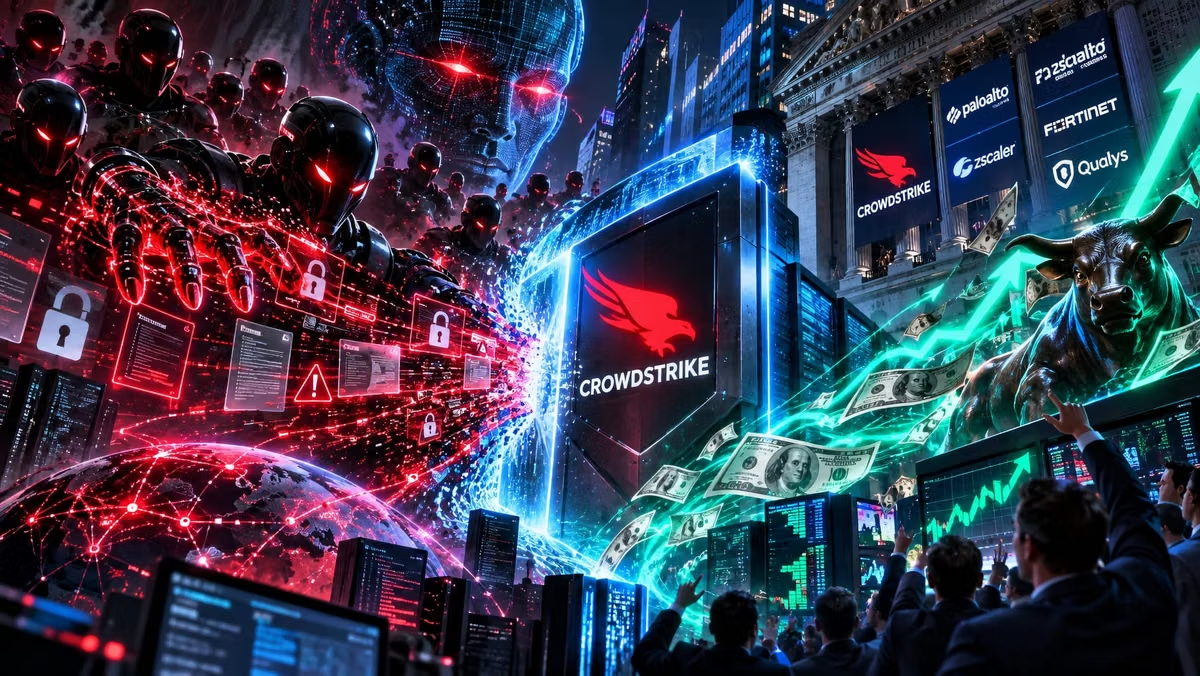
The AI threat everyone has been reading about all year just became a stock trade. CrowdStrike (CRWD) jumped around 14 percent in a single day. It is not unheard of, and it has happened plenty of times before. But Palo Alto Networks, Zscaler, and the whole cyber security sector rallied too.
The trigger was not a breach. It was fear. Surprise, surprise.
The CEO of Anthropic published an essay arguing AI development should slow down so safety can catch up. Many people much smarter than me advocate this solid idea. The market read it as a warning, and money rotated out of the chipmakers building AI and into the companies defending against it. CrowdStrike was positioned as the clearest bet, and it ran.
First, the threat is real. I have spent this month documenting it. AI rebuilding malware faster than defenders can block it. Attacks running as swarms of agents. A full compromise for a few dollars in tokens. CrowdStrike’s own numbers say AI-enabled adversary activity is up 89 percent year-over-year. Average eCrime breakout time has collapsed to 29 minutes, with the fastest observed at 27 seconds. None of it is invented. The machine-speed attack is happening, and the best cyber security vendors in the world document it well.
The CrowdStrike response is also real. At Fal.Con, its yearly user conference earlier this month, CEO George Kurtz declared the old threat model obliterated. Kurtz coined a phrase for the new one, the agent-state, where AI gives ordinary threat actors capabilities once associated with nation states. To its credit, the company has shipped a wave of AI-defense products to match its rhetoric. It is a legitimate business responding to a legitimate problem.
One additional variable is also true. The company sounding the alarm is the same company selling the alarm system. It is not an accusation. It is just the structure, and it applies to every security vendor, not only CrowdStrike. The firms documenting how terrifying the threat is are the very same firms whose revenue depends on customers finding it terrifying. The incentive to warn and the incentive to sell point in the exact same direction.
None of this makes the warning false. The threat can be genuinely dangerous and genuinely good for business at the same time, and the two are not mutually exclusive. But when a vendor’s threat report and its sales pitch are the same document, read the report knowing what else it is trying to do. Critical thinking matters now more than ever.
Wall Street noticed the danger. The open question is whether the market priced the danger or the story about the danger. CrowdStrike now trades at roughly 148 times next year’s expected earnings, a lot of certainty about a future nobody can see clearly yet. One analyst made the quiet point everyone chasing the trade skips. Elevated risk does not automatically mean companies double their security budgets. Being scared is not the same as spending, and a stock priced for the spending needs the spending to actually show up.
In my experience, most security budgets are shrinking, not growing. CrowdStrike would like to see more module adoption across its existing customers, and marketing fear is one way to force the issue. The fear is not necessarily a lie, but it deserves awareness when reading these reports.
None of this is advice about the stock. I am not in that business, and nobody should take market calls from me. Ever. It is just an observation about a loop. The same fear filling my posts fills their earnings calls, and this week it filled a rally.
Once Wall Street starts rewarding the fear, the loop gets even cleaner. Warn about the threat, sell the defense, watch the stock rise. The market itself then becomes evidence everyone else must be taking the threat seriously too.
The machine-speed attack is real. The defense is real. And the fear is now an asset class. All three are true, and the third is the part nobody selling either of the first two will point out.
Cyber security used to monetize breaches. Now it can monetize the anticipation of breaches before they even happen. Wall Street found a way to short the apocalypse and go long on the people selling the fire extinguishers.