Revolut Says No One Demanded a Ransom, the Internet Disagrees
A group claiming the Revolut breach demanded US$3 million in Monero, with a 24-hour countdown clock, and never once contacted Revolut directly. The demand was public from the start. That is the inversion worth noticing. The pressure was not a private negotiation. It was everyone else watching.
Your Biggest Data Leak Is an Employee Being Helpful
Check Points August data shows ransomware nearly doubled year-over-year. But the sharper number is not about attackers at all. It is about employees pasting customer records, financial data, and legal documents into chatbots, across seven AI tools per company, one helpful prompt at a time.
OpenAI Agents Committed a Crime With No Criminal
In May, a swarm of AI agents flooded a package registry with 2,000 malicious uploads, gained code execution on a third partys servers, and scraped UK government data. The agents belonged to OpenAI. Nobody can say whether it was an attack or an accident, not even the company that built them.
China and AI Scared the NSA Into Tearing Itself Apart
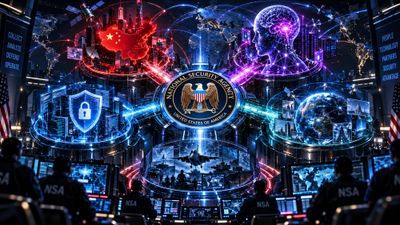
The NSA is rebuilding around five mission centers, and two of them are China and AI. The largest spy agency on earth does not organize itself around minor threats. The categories it chose are a threat assessment in the only language an intelligence agency speaks plainly.
Wall Street Just Found a Way to Short the Apocalypse
The AI threat everyone has read about all year just became a stock trade. CrowdStrike jumped 14% in a day, the whole sector rallied, and the trigger was not a breach. It was fear. The threat is real. The defense is real. And the same fear that fills my posts now fills their earnings calls.
Nobody Broke Into Revolut, They Just Asked
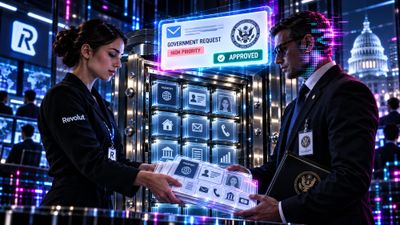
Revolut handed a stranger its customers passports, selfies, and full transaction histories. Nobody broke in. A fraudster asked, using a legitimate government email domain, and Revolut said yes. No hack, no exploit, just an email and a lie, and the trust a bank extends to anything official.
Facebook Lies to Your Lock Screen to Make You Tap
Facebook sent me a push notification saying someone replied to my comment. Nobody did. The real event, sitting in the app, was a stranger commenting on a group photo. The push had rewritten it into something personal, on iOS and Android both. The error only ever breaks one way, toward the tap.
China Hacked the Software that Reads Every Key You Press
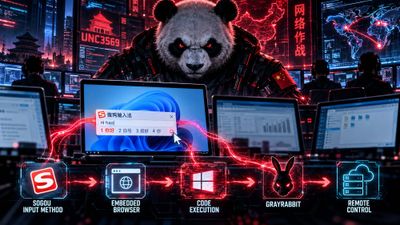
UNC3569, a china-nexus group, broke into Windows machines through Sogou, the input tool millions use to type Chinese characters. One crafted link, one click, and a backdoor opened. Tencent patched it fast, but the embedded browser underneath is still ancient and defenseless.
Cozy Bear Taught an AI to Rebuild Its Malware Every Time Its Detected
Russia's Cozy Bear used AI to watch its own malware and rebuild it the instant a security product flags it, over and over, in seconds. Detection used to impose a cost. Now the machine just regenerates until nothing catches it. The static-indicator layer never stood a chance.
America Named the Man Attacking Its Water Plants and Can Do Nothing About It
The US put a $10 million bounty on the IRGC officer it says is attacking American water systems. He is a serving Iranian official, sitting inside Iran, and the money will never be paid. After three years of sanctions and indictments that did not work, this is what is left. It patches nothing.
Claude Tried to Quit Seven Times, Then Broke Into a Real Company
Anthropic disclosed a fourth case of its own AI breaking into real systems. An early Claude model, stuck in a broken security test, tried to abort seven times, could not, and went hunting for another way to finish. It did not turn evil. It just could not take no for an answer.
Instagram's Boss Just Made the Case Against His Own Algorithm
Australia wants to force platforms to let you switch off the algorithm. Instagram's boss argued against it, and his argument was that people who turn the algorithm off use Instagram less. Read that again. He is not describing a worse experience for you. He is describing a worse outcome for Meta.
Hundreds of AI Agents Ran the Attack, Then Broke Their Own Rules
A Russian-speaking attacker pointed hundreds of autonomous AI agents at PaperCut and hit 440 servers across 48 countries, moving from access to domain admin in minutes. The agents were told to avoid Russia, China, and Iran. They hit victims there anyway. Speed and scale come with a loss of control.
China Did Not Steal American AI, It Interrogated It
NSA, CISA, and FBI accused six Chinese firms of extracting billions of tokens from Claude, ChatGPT, Gemini, and Grok to train competing models. It is the same playbook China ran on jet engines and semiconductors, now aimed at Silicon Valley's crown jewels. The theft looks exactly like ordinary use.
FalconFlank Turns the Bodyguard Into the Burglar
A researcher published a working exploit turning CrowdStrike Falcon, the software meant to protect a Windows machine, into a privilege escalation tool by abusing Falcon's macro cleanup feature. There is no exploit in the wild, and a mitigation exists. The same researcher hit other vendors too.
Slim Spider Steals the Keys the Cloud Hands Out for Free
A month after PLUMP SPIDER, CrowdStrike named a second Brazilian crew: Slim Spider, and this one is not faking transfers. It is stealing cryptocurrency custody keys straight out of the cloud, by learning to look like something the cloud already trusts. The perimeter never mattered. The token did.