Why I Finally Left the iPhone for Android
for almost eighteen years, choosing my primary phone was never really a decision. it was easy. it was an iphone.
my first was the iphone 3g, the first iphone apple officially sold in japan, back in 2008. from then on the model changed, ios evolved around it, applications came and went, and apple built an increasingly enormous ecosystem around the device. through all of it, one constant held. whatever else i happened to be carrying, testing, or taking apart, the iphone was my phone.
until now.
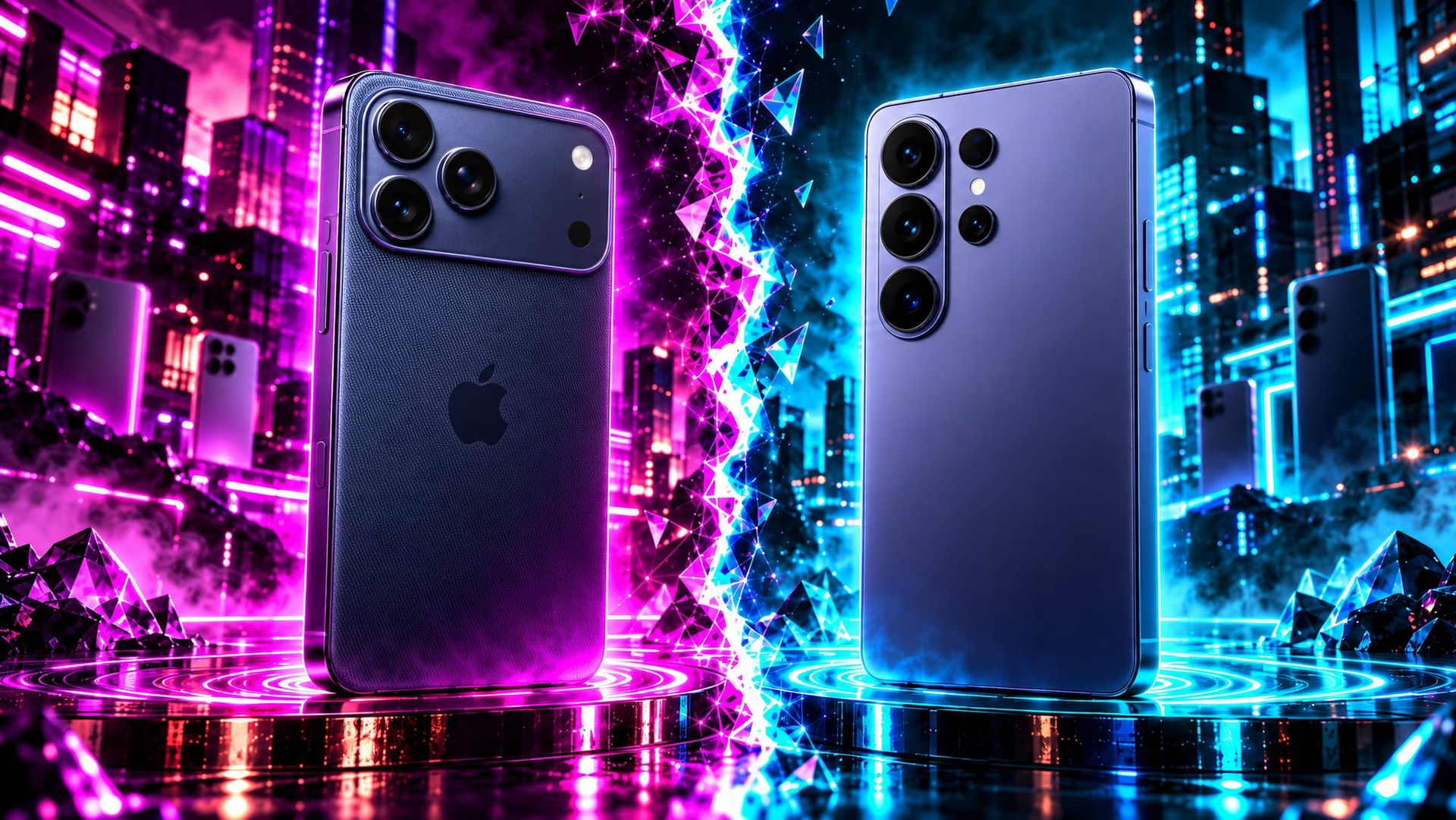
for the first time since 2008, my primary phone is no longer an iphone. it is a samsung galaxy s26 ultra running oneui 8.5. and the strange part is i did not switch because i decided android was better. in plenty of ways i still think ios is the overall better designed platform. the interface is more polished, the application ecosystem is far more cohesive, and apple still does some things better than anyone else.
i just increasingly prefer using android. those two things are not contradictory. working out why they are not is where this stopped being a phone swap and started being something i actually wanted to write about.
i know this is going to sound weird as fuck to many of my close friends and family, particularly the ones i pushed toward an iphone for its stronger security and privacy. many people know me simply as a lifelong iphone and apple guy.
ok, i get it. eighteen years is a long time to be an apple user and then seemingly, maybe randomly from the outsider's perspective, switch over to android. let me just say this straight-up right from the get-go. my intent with this essay is not to try to convert or convince anyone to follow in my footsteps.
this is not android winning or apple losing, and it is not a cult you are required to join. it is just me working out why my very own habits finally stopped holding up. if you love your iphone, outstanding, keep it. i just stopped assuming mine was the right call merely because it always had been.
i should explain why i avoided android for so long, because the reason is not only familiarity. i work in cyber threat intelligence. for most of my smartphone life that gave me a very specific reason to steer hella clear. early android was a threat cesspool. malicious applications, sketchy distribution channels, inconsistent security practices, and a threat landscape considerably more treacherous than anything around ios. from where i sat, professionally, moving the device holding most of my digital life onto android read like volunteering for the exact problems i spent my working hours studying in other people.
that calculus has changed in recent years. android is no longer a cyber security toxic wasteland. google has substantially moved the needle, fixing the vast majority of the issues plaguing the platform in its early days. both ecosystems matured. both apple and google built much stronger controls around malicious applications. the gap is nowhere near as wide as it once was. in my own experience apple is still faster to clear bad applications out once someone identifies them, but android no longer feels like a security compromise.
apple still holds an objective advantage here, and i refuse to pretend otherwise. they have a stricter app review process, much tighter limits on sideloading, and a smaller, more controlled attack surface. my honest assessment is not that the two are equal. however, the gap has shrunk from a chasm to a margin. for my own personal threat model that margin is one i am willing to live with. eventually security simply stopped being a reason not to try android. it is just an excuse.
what did not go away was the habit of looking. you do not spend a career studying how systems behave and then stop noticing your own behavior. the instinct did not disappear when i picked up an android phone. it just found new things to watch.
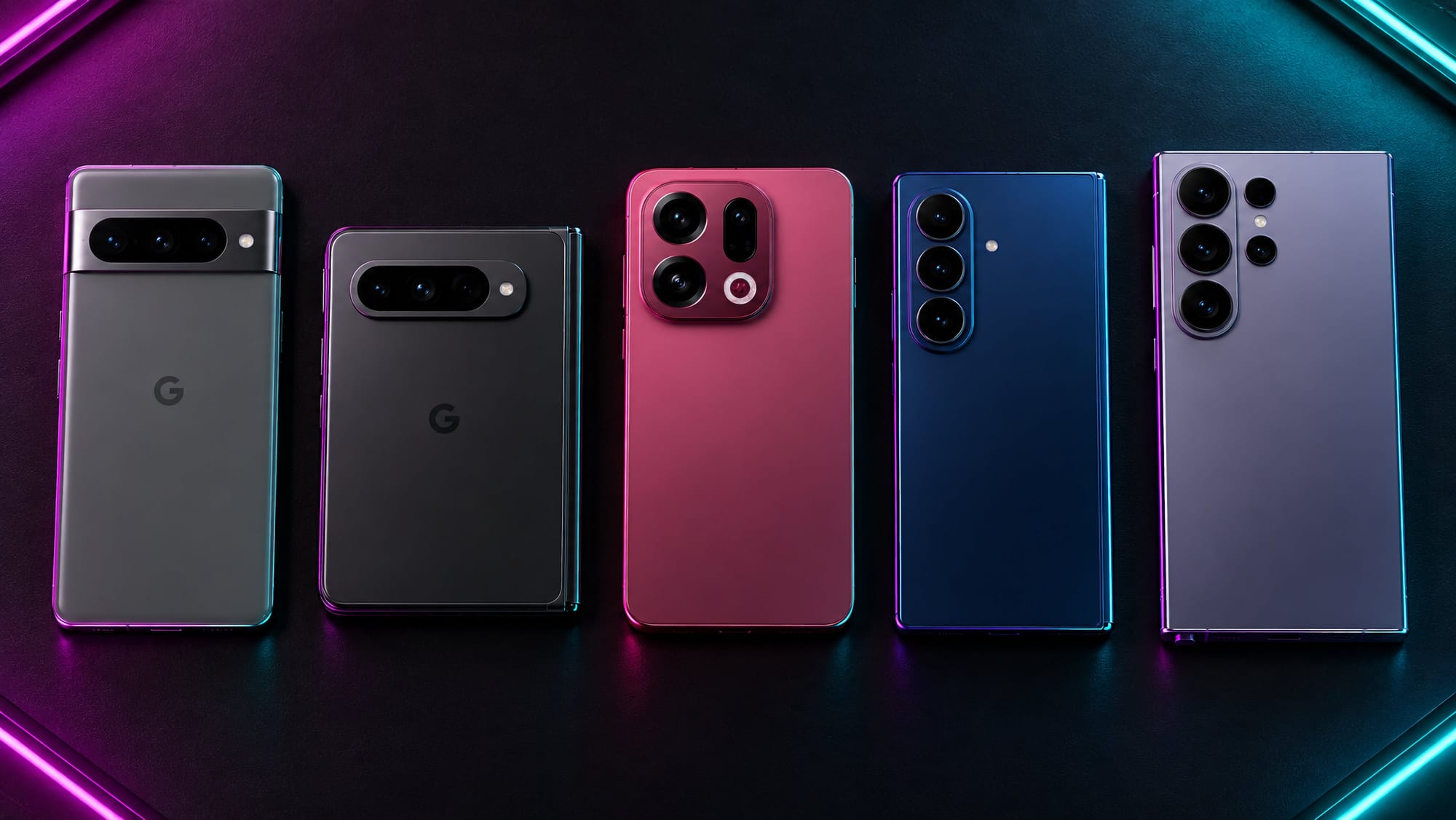
so about two years ago i finally tried. android stayed on my secondary phone, because i was not about to throw nearly two decades of muscle memory out the window on day one. i started with a pixel 7 pro, and i enjoyed it more than i expected. the pixel experience felt refreshingly stripped down. little bloat, little getting in the way, and enough room to make the device feel personal without drowning me in settings. for the first time in years i found myself changing things simply because i wanted them changed.
that sounds trivial until you have spent most of your life inside apple's philosophy, which is extraordinarily good at deciding what the ideal experience should be and then polishing the hell out of it. the tradeoff is apple makes those decisions for you. the pixel was my first real taste of the alternative.
the problem was the hardware. google leans on its software to compensate for hardware never quite as premium as the competition. clever as hell, but a flagship pixel in the hand does not feel like it belongs in the same tier as a comparable samsung or iphone, and that mattered to me more than i expected.
i liked the pixel 7 pro enough to go further, so i bought a pixel fold. on paper it was exactly the kind of ridiculous gadget i should love. one device, phone outside, tablet inside, maximum nonsense. in practice it was terrible for me. heavy, awkwardly proportioned, and far too many applications had no idea what to do when i opened it. the hardware concept had run considerably ahead of the software around it. i wanted to like it far more than i liked living with it, so i went back to the 7 pro.
i had just spent real money on a feature i barely used. i kept unfolding the pixel fold less because i needed the screen and more because i felt guilty about not using it.
i was enamored with the specs on the oppo find x9 pro camera, and i was curious about coloros, so i picked one up when i was in bangkok sometime in 2025. it turns out this is where android stopped feeling like an experiment. excellent hardware, a genuinely good camera, and coloros opened up another level of personalization.
interestingly the catch was coloros itself. good enough to make me want to stay, buggy enough to keep me from fully committing. nothing catastrophic. the friction just accumulated.
when samsung released the galaxy z fold 7 i moved almost immediately. the device is remarkably thin, and the people who built it had clearly thought about what an operating system should do on a folding screen. obviously this was not their first foray into foldables, and it shows. oneui felt cohesive across both displays in a way the pixel fold never managed. for a little while i thought samsung had finally made the form factor work for me.
the problem was not samsung. it was me. once the novelty burned off i started watching how i actually used the thing instead of how i imagined i would. something like 90% of my time lived on the outer display. i would remember the enormous screen inside, open it, use it for a few minutes, and fold it away. unfolding started to feel less like gaining function and more like performing a chore to justify the expensive feature i had bought.
there it was again. a device built around a possibility i did not really need, and i kept it in rotation mostly out of guilt. a nagging thought kept reappearing. why keep using a foldable with an inferior outer screen, one narrower than a standard slab phone? why keep using a phone i have to baby because its inner screen is so delicate?
i went back to the oppo. it just made more sense for how i actually used a phone. slab phones fit my usage patterns better, and introduce far less friction than foldables. for me.
by then something had quietly changed. android was no longer the experiment. i knew i liked it. i liked the freedom, the personalization, the ability to make the device behave the way i wanted. what i had not found was a combination of hardware and software polished enough to replace the iphone rather than just sit beside it.
then samsung released the galaxy s26 ultra and i bought one nearly on a whim, to see what oneui could do on a conventional flagship instead of a folding one. i fell in love with it almost immediately.
even then i did not swap right away. the s26u sat as my secondary phone for roughly six months while the iphone 17 pro max remained primary, for no thoughtful reason at all. the iphone was primary because the iphone had always been primary. that was the entire logic.
over the months my behavior started contradicting the hierarchy i had internally assigned in my illogical brain. when both phones sat in front of me, i kept picking up the samsung. i was not testing anything. i was not reaching for some samsung-only trick. i simply preferred using the s26u. maybe it was novelty?
in my work, the fastest way to reach a wrong conclusion is to trust an assumption you never actually examined. i had one sitting in my pocket. the iphone is my primary phone. i had never once tested the why of it. i had just inherited it from eighteen years of my own habit. so i finally asked the elusive, uncomfortable question. was the iphone still primary because it was the phone i preferred, or because habit had taught me it belonged there?
that was when i swapped them. the samsung became primary. the iphone became secondary. and then i had to figure out why.
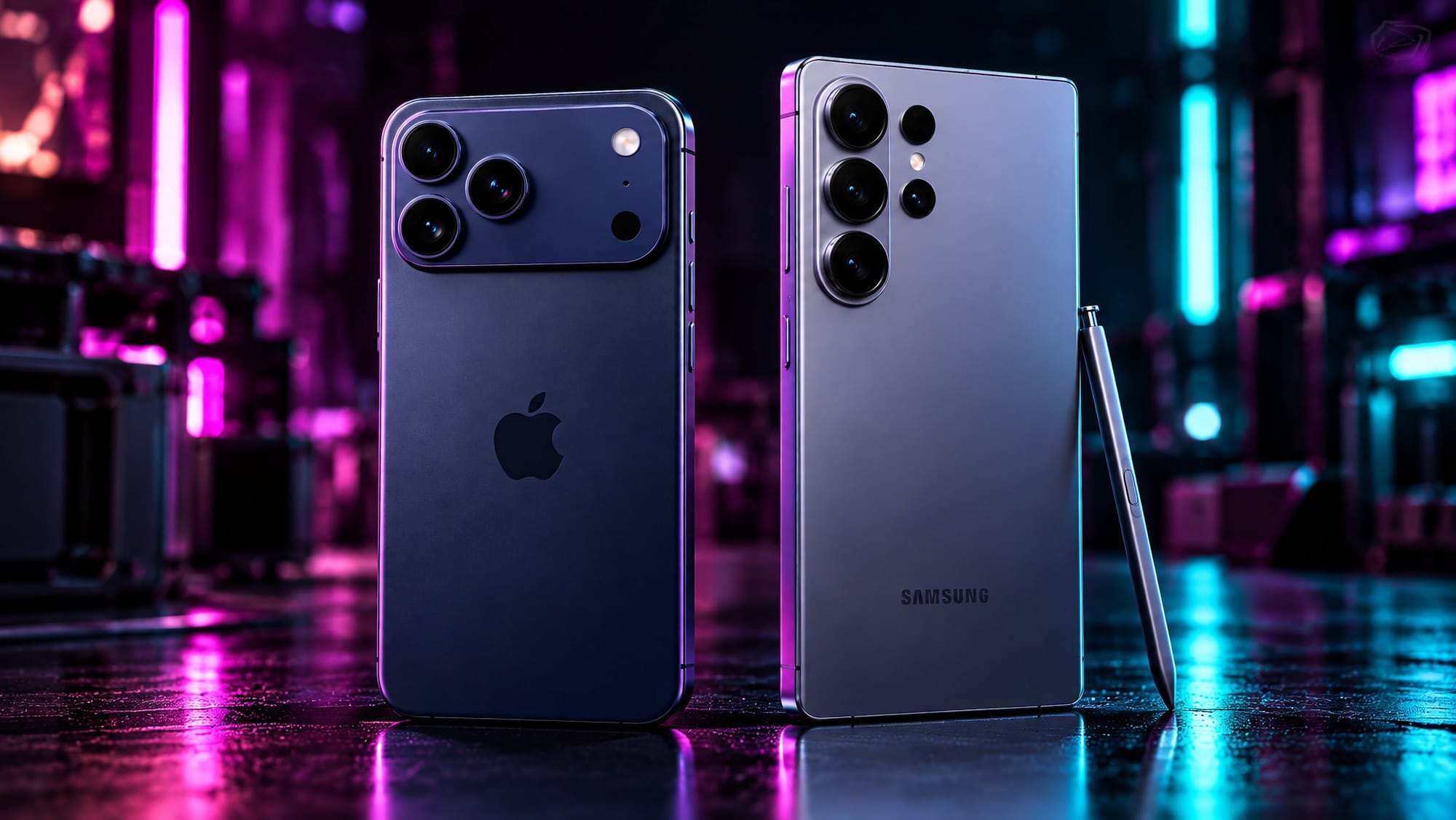
the answer is not that ios went bad. it remains an exceptionally solid platform, and i still think apple produces the better overall platform experience. the iphone feels like a finished product in a way the broader android world often cannot match. hardware, software, animations, applications, and services feel designed to exist together. the average ios application feels more polished, navigation is more consistent, and developers seem more willing to obsess over the final 10% of the experience.
android can be considerably messier. but this is where people unfairly bolt samsung and android together. oneui 8.5 itself feels remarkably cohesive. it no longer feels like samsung painted something over android. settings are mostly where i expect them, the visual language stays consistent, and oneui exposes the functionality without turning the screen into an engineering console. it feels intentional.
the shit show usually starts when i leave oneui and open third-party android applications. one looks beautiful. the next looks like nobody has touched its interface since 2017. another ignores every navigation convention around it. another hides important controls somewhere no rational person would look. and another simply does not fucking work the way it is advertised.
fragmentation is something i think about for a living, usually as an attacker's opportunity. more platforms, more versions, more vendor behaviors, more configurations, more seams to slip through. on android that same fragmentation shows up as experience. apple hands developers a narrow, predictable target. android hands them samsung, google, oppo, xiaomi, vivo, a dozen os versions, and whatever else wandered into the room. freedom has a price, and inconsistency is part of the bill.
ios has evolved enormously since 2008, but strangely, some of the parts i interact with most seem to have gone backwards.
start with the keyboard, because it baffles me. how the fuck does the ios keyboard get worse every year? it is one of the most fundamental interfaces on the device, i use it constantly, and autocorrect increasingly feels like something i have to defend my writing against. i type a legitimate word, ios changes it, i correct the correction, and sometimes it quietly edits something else behind me.
gboard mostly just works. i make fewer mistakes and fight it far less. yes, gboard is available on ios, and i get i could use it to solve this problem. but i find too many quirks with third-party keyboards on ios. they often crash for no apparent reason, and the experience is not as seamless as it is on android, where it is completely native.
maybe a controlled test would show the objective gap between ios and android keyboard use is small. i do not care. i type on this thing all day, and whichever keyboard makes me fight it less is the better one for me. it is as simple as that.
text handling tells the same story. on android i long press a text box and the paste option instantly shows up. on ios i lightly tap the field and pray the contextual menu appears, which it does eventually, after a delay, but only after it feels like it. sometimes it never shows and i tap again. sometimes i find myself tapping four times because of the delay. it is a tiny thing i do dozens of times a day, and on ios it adds a small drag of friction every single time.
the keyboard and the copy-paste dance are the push. freedom is the pull, and it is mostly why i keep reaching for the samsung.
then there is control, which is where my professional instincts and my personal preferences finally line up. i spend my working life caring about what a system is doing, what it talks to, and whether i can actually see it. android gives me that same visibility over my own device, and it turns out i wanted it there too.
notifications are the clearest example. ios gives me notification controls, but compared with android they feel remarkably coarse.
android gives me control over the entire notification system. if an application fires promotional bullshit i never asked for, i can find the exact channel behind it and kill only that category while keeping the useful alerts. i can recover anything i dismissed too fast through notification history. if a developer dumped every possible alert into one channel, it tells me something about how much thought went into the application, right before i mute the whole thing. the distinction sounds pedantic until you live with both. this freedom is invigorating.
the good lock app takes personalization and customization even further, and it is fucking amazing, the near-opposite of apple's philosophy. samsung hands me a supported set of tools and essentially says go fuck with the operating system. home screen, lock screen, gestures, recents, quick settings, icons, animations, navigation, dozens of smaller behaviors. i put an icon where i want it and it stays there, which sounds absurd until you remember reorganizing an ios home screen still plays out like a sliding puzzle i never asked to play.
some of this is pure vanity yet i love it anyway. i change icons when i am bored. edge lighting makes the display glow in a color i picked when a notification lands. none of it makes the processor faster or the battery last longer. it just makes the phone feel like mine, and it feels fresh again for no reason other than i decided it should. multiply a small pleasure across hundreds of interactions a day and it stops being trivial.
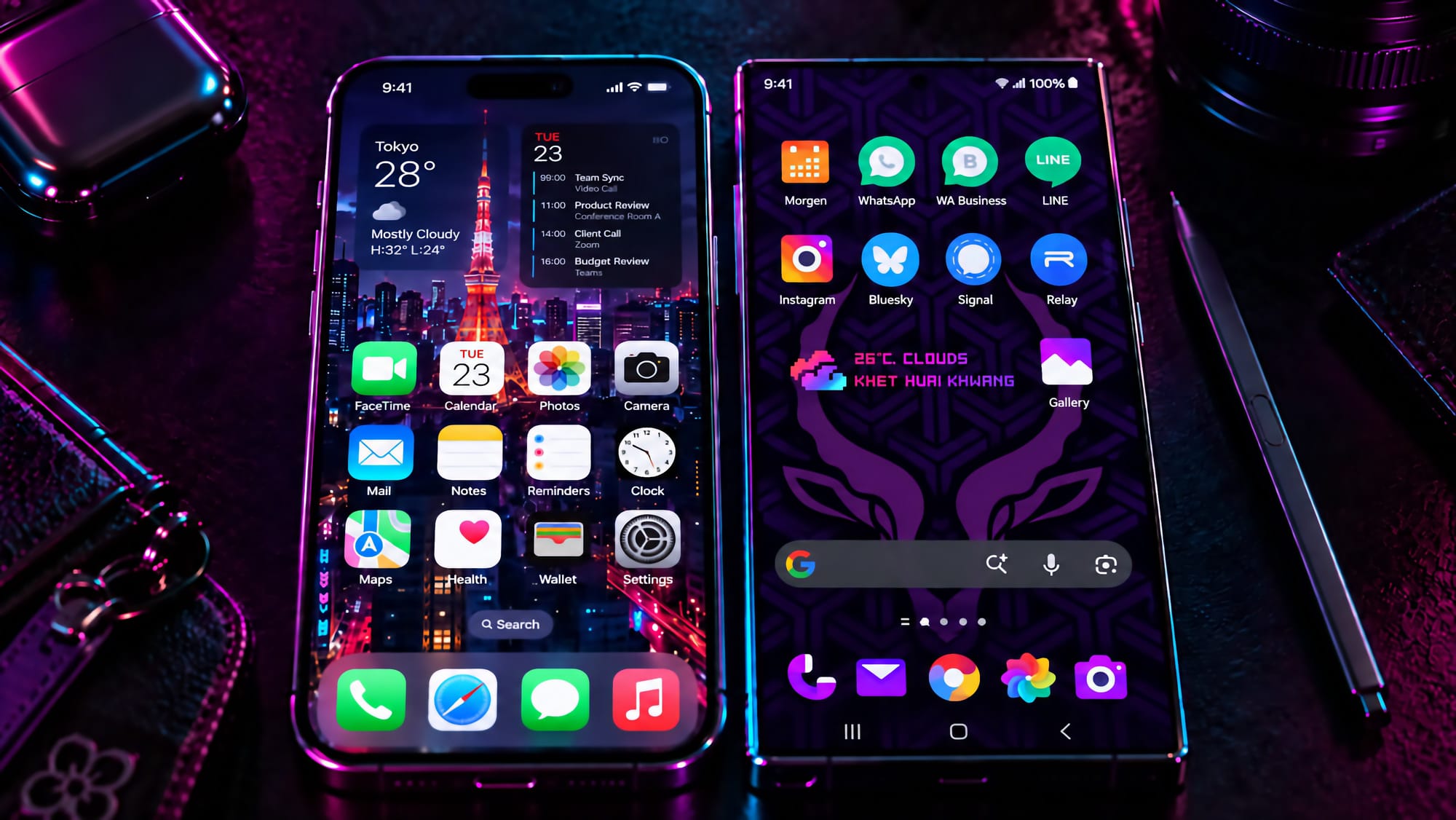
freedom does keep sending me the bill, though, and it usually arrives as a third-party application.
fantastical is the one still making this transition hurt. i live in it across my apple devices, and nothing on android comes close on mobile. there are plenty of calendar applications, some genuinely good, and not one of them is fantastical. one feature alone drives me up the wall. combine like events. if the same meeting sits across several calendars, i do not need four copies in four colors stacked in four rows. merge them, show me which calendars hold it, move on. fantastical understands this. android calendar developers apparently consider it quantum computing. two of them do offer it, to be fair, but those two still leave a lot to be desired on functionality and ui/ux.
flighty is the next wound. capable flight trackers exist on android, but there is no flighty, and for someone who travels as much as i do the gap matters. flighty is not a pile of flight data. the alerts, the presentation, the tiny decisions all feel built by someone who obsessed over how frequent travelers actually use the thing. the alternatives reproduce the functionality. they do not reproduce the experience. aviate comes close but still misses the mark in a side-by-side comparison.
email has been its own slog. apple mail is not exciting, which is exactly why it works. finding an android equivalent took far more effort than it should have. i need real imap because i use fastmail and gmail. leaning entirely on the gmail application is a nonstarter, and i do not much like it anyway. i landed on em client, which has been solid. thunderbird is decent but clunky. spark has arguably the best interface of the lot, but i am not willing to make the security and privacy tradeoff in how it handles accounts. someone else might be. professionally, i am not.
there is a pattern in all of this. android gives me more options, then makes me spend real time deciding which option sucks the least. sometimes freedom costs consistency. sometimes it costs polish. sometimes it costs an hour hunting for something ios simply handled out of the box.
and sometimes the same application is just better on one side for no reason i can control. instagram has shipped features to my ios account it never shipped to the exact same account on android. same company, same account, same service, different experience. as a user i do not care whose engineering problem that is. i only know the feature exists on one phone and not the other. maybe that is apple's controlled ecosystem quietly paying off. maybe it is a/b testing on meta's side. maybe it is something else. but developers know exactly what they are building for. android hands me freedom at the system level, then occasionally hands that same freedom to a developer who decided conventions were optional.
having spent eighteen years on the iphone, i probably sound like a caged animal to a lot of people. imessage, apple watch, airdrop, and much more from the broader apple ecosystem. the obvious question is how i got out of it, and the honest answer is it barely held me back. it was a concern i had initially, but the fears were allayed in rapid fashion.
i have spent a small fortune inside the apple walled garden over the years. apps, apple music, apple tv, and movies i bought and rewatch regularly. the reflex is to call it a sunk cost and stay put. that is likely what most people do. not solely because it is a lot of money, but it can involve a considerable amount of elbow grease to properly and fully migrate. particularly if you are not the most technically savvy.
but i still use all of my apple investments, outside of the older decommissioned iphones and macbooks. music and tv both live on android. icloud still keeps a copy of my photos. fantastical continues to run on my mac and my iphone right alongside the samsung. paying for something in the past is not a reason to prevent me from making the full, faithful leap over to android.
imessage is the wall trapping most americans, and it never really trapped me. living in asia, my messaging is line, whatsapp, and signal, with the latter being my primary preference. exactly one irregular group and one friend still reach me on imessage. everything else, personal and business, was already cross-platform. that made the move simple and clean.
the one apple feature i am unable to fully kill is facetime. there is one friend i facetime fairly frequently, but they also use line. those calls migrate to that messaging platform without much thought. however, my parents are the real holdouts in this story. facetime is basically the only way i reach them. trying to get them onto some other messaging app, like whatsapp, solely for calling is likely a non-starter. so the iphone must stay alive in my pocket for the handful of calls that matter most. this is one more reason the old phone is not allowed to completely disappear. it has just received a demotion and changed jobs.
the rest let go easier than i expected. i have an apple watch, but i have worn a garmin for the past year or so. that leash was already cut. macos works with the samsung without complaint, and nothing about my desktop life changed. even migration, the part i dreaded, was a non-issue, because i had been backing my photos up to google photos at the same time as icloud for ages. the friction i braced for never really arrived in a terrifying form.
there are also places apple is simply better for me, and portrait photography is the clearest example. portrait mode on the iphone 17 pro max beats what i get from the s26u. not slightly. considerably. if i specifically want a portrait shot, i reach for the iphone. this is not just people, but objects. if i want a portrait shot of a beer in the middle of a bar, apple pulls it off magnificently. samsung not so much.
faceid is another one. it is dramatically better than any face unlock on android, and the s26u drops back to the fingerprint reader more often than i would like. but i have folded the fingerprint into my routine and it is fine. at first it can be a bit jarring but it is easy to get used to. a samsung face unlock as fast and reliable as apple's would be a real win.
the battery is closer than i expected. near enough to call even on most days, though the iphone 17 pro max still pulls ahead when both get pushed hard. friction? yes. enough to not migrate? no.
earbuds are the one accessory still pulling me back to the iphone. i use my airpods pro 3s only within the apple ecosystem. never once have i considered pairing them with the s26u even though they are allegedly compatible, just nerfed on any device not an apple product. this is partly out of habit, but also because the airpods pros are a more comfortable fit for my ears, and the sound profile is noticeably better than the galaxy buds 4 pros.
do not get me wrong. the buds 4 pros are genuinely nice. they just feel different. for example, switching between active noise cancelling and passthrough feels like it takes longer than it should. it is as if holding the stem needs an extra beat before registering the gesture. it is a small amount of annoyance, and is something i notice every single time. at the end of the day, i am no audiophile, and the buds 4 pros work perfectly fine with the s26u for everyday use.
these two earbuds are very close. this is not a blowout. batteries are roughly on-par, the buds 4 pros charge fast and last well, and i actually prefer their case size to the airpods pros. but when i want earbuds, i find myself constantly reaching for the airpods. that means reaching for the iphone to go with them. one more small tether keeping the old phone in rotation instead of in a drawer.
there is one tradeoff i did not get to dodge. as someone who does cyber security for a living it is the one thing i think about more than anything else. google's whole model is data collection. apple's whole pitch, for years now, has been privacy. moving my primary device onto google's platform means handing more of myself to a company monetizing exactly that, and i never tried to pretend otherwise.
i turned off as much google tracking as the settings allow, at least the switches i know about, and the ones that do not cost me function day to day. it helps. it does not solve the broader concern. i made my peace with the rest as a risk versus reward call.
the reward, for now, is the control and the missing friction this whole essay has been circling. that is what i am buying with the exposure, not some killer ai feature that all the major vendors are pimping with every new operating system or hardware release.
gemini, if i am being blunt, is absolute trash. i barely touch on-device ai today. but android is the more open bet on where this is all heading, and that openness is worth something to me even before it pays off. someone with my job landing on the wrong side of the privacy line is fair to question. i questioned it too. i just decided the control i gain everywhere else was worth the exposure i take here, with eyes wide open.
so that is the whole thing in a single bar. the iphone for the beer shot, the samsung for everything after it. i carry both and let each win what it is actually good at, which is exactly why the platform tribalism looks so strange to me. neither apple nor samsung needs me defending its honor online, and neither has to be crowned the winner before i am allowed to enjoy it. people talk about smartphone platforms like they joined a faith and now have to defend it against heretics carrying the wrong slab of glass.
the loudest voices in this rivalry tend to have one thing in common. most of them have only ever used one side. they defend a platform they live on and attack one they have never actually lived with. it is easy to hate android when you have never left ios, and just as easy to sneer at the iphone when you have never given it a real shot.
the hate is blind because the experience behind it is missing. it is only after you carry both for months, running your actual life on each, when you finally see the honest picture. both platforms have real strengths. both have genuine, maddening flaws. neither is the clean winner a fanboy needs it to be.
picking a phone is a compromise, the same as almost everything else in life. the only thing worth working out is which set of tradeoffs you can live with. which platform gives the least friction for you. not for a reviewer, and not for some stranger defending the faith online. for the way you actually live, inside the budget you actually have. buy the phone you like. it does not have to be a personality.
samsung reminds me it can still do spectacularly dumb things. how the fuck is it still incapable of shipping a major os upgrade to its own flagships worldwide at roughly the same time? apple announces a version, release day comes, and the supported iphones upgrade together. samsung turns the same process into international diplomacy. one region gets it. another waits. models drift onto different schedules. carriers wedge themselves into the middle. meanwhile people post screenshots from countries where it already landed, and everyone else refreshes the update screen like idiots.
the irony is almost too clean. apple gives me the update coherently and then gives me fewer ways to change how the system behaves. samsung makes me wait and then lets me change nearly everything once it finally arrives. pick your poison.
after living with both side by side long enough, that contradiction explains the move better than any spec sheet could. ios is still the platform i admire more as a finished product. android is increasingly the one i enjoy using more. apple gives me polish, consistency, and an ecosystem where most things understand how they are supposed to behave. samsung gives me agency, and a device increasingly behaving the way i want. ios protects me from bad choices. android lets me make them.
i started this thinking i preferred android because it felt faster. maybe some of that is real. but the longer i sit with it, the more i think what i am calling speed is actually the absence of friction. all those small drags i kept noticing and kept excusing were the same thing wearing different clothes. dozens of tiny moments a day where the device behaves the way i expect. half a second here, one killed notification there, one setting exposed exactly where i reach for it. none of it survives as a headline on a comparison chart. together it changes how the whole thing feels.
that is the part i keep circling. a phone is not a benchmark or a spec sheet. it is thousands of tiny interactions repeated every day until you stop consciously noticing them. and the interesting question is what happens after you stop noticing. which device does your hand reach for when you are not thinking about it? right now, mine reaches for the samsung.
i am not ready to call the experiment finished, because novelty is still a variable i cannot completely rule out. eighteen years is a long time on one platform, and almost anything genuinely different feels refreshing for a while. i would be lying to pretend otherwise. so the iphone 17 pro max stays with me. i still use it. i still pull it out for portraits. i still miss fantastical and flighty more than i expected to. i still hit the occasional android application making me wonder whether anyone who built it has ever used it.
there is a more difficult version of that doubt. i once kept a foldable around mostly to justify paying damn near an arm and a leg for the device. so i have to ask whether i am doing the same thing with the s26u. am i clinging to an expensive call merely to avoid admitting it was the wrong move?
the honest answer is i cannot fully know yet. any reason i reach for, the joy of using it, my hand going to it first, could just as easily be the bias wearing the costume of evidence, especially since i am grading my own homework. the one thing i will lean on is time. novelty fades, and sunk-cost glow fades. after months os use i still enjoy the phone. sure, that may be weak proof, but it is not zero proof. so i keep the question open. the day i stop asking is the day the bias wins.
the difference is the iphone is the secondary device now, and i am going to leave it there and see what remains once the novelty finally burns off. maybe in six months i crawl back into apple's extraordinarily comfortable ecosystem and wonder what i was thinking. possible. i am increasingly doubtful.
the s26u did not become my primary phone by beating the iphone in every category. it absolutely does not. it became primary because after months of carrying both, i stopped choosing between them and just started reaching for one. i am trained to distrust my own assumptions, and my own hand kept handing me the evidence.
for almost eighteen years apple showed me how good a phone can be when one company controls nearly every part of the experience. android reminded me how different a phone feels when more of that control belongs to me. ios might still be the better finished product. right now, android feels more like mine.
for almost eighteen years, the iphone was the phone i reached for.
now it is the phone i reach past.