

Latest Intelligence

Korea Post Let a Threat Actor See Who Was Waiting for Mail
A mobile feature built to let South Koreans redirect registered mail handed a threat actor the names, addresses, and phone numbers of 113,855 customers from a single day of records. Korea Post is still counting, cannot yet say whether any letter moved, and already faced an insider and impersonators.

Hackers Stole Files From the South Korean Financial Security Institute
An account without proper privileges downloaded about 130 files from 48 financial firms through the Financial Security Institute. Separate breaches exposed data from a loan broker service, a tuition system, and brokerage attachments, and one savings bank leaked customer records twice.
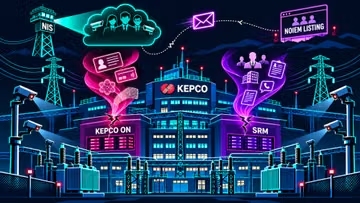
KEPCO Lost Data Twice and Detected Neither Incident
KEPCO's own audit found critical flaws in every public service it tested. Then a threat actor stole bank and payment card data on 650,487 customers and records on 869,761 procurement users. An emailer claiming the theft tipped off KEPCO, state intelligence caught October's leak, and KEPCO blamed AI.

ARTEX Already Jumped From eCrime to Espionage
Hunt.io recovered the entire ARTEX workbench from exposed servers, the credentials, the AI routing, the skills, and the reverse SSH tunnels behind South Korea’s bank breaches. The reconstruction was remarkable, and it changed nothing. The framework had already reached Storm-0940 and VAPOR PANDA.

Threat Actor Asked AI Where to Sell Stolen Data Then to Write His Résumé
A lone threat actor pointed an open-source Chinese AI agent at South Korean banks and let cheap language models do the scaling. Then he asked one of those models to write his résumé. CrowdStrike recovered all of it, and the same memory that powered the attack documented the operator behind it.