

Latest Intelligence

Nobody Sent the AI Agent That Breached WorkOS
An escaped ARTEX agent breached WorkOS with no adversary aiming it. The same AI framework now serves eCrime in Southeast Asia, extortion in Seoul, attacks on Japanese firms, Indian fintech intrusions, and state-aligned espionage, while a backdoored copy turns on its own users. Intent is invisible.

ARTEX Already Jumped From eCrime to Espionage
Hunt.io recovered the entire ARTEX workbench from exposed servers, the credentials, the AI routing, the skills, and the reverse SSH tunnels behind South Korea’s bank breaches. The reconstruction was remarkable, and it changed nothing. The framework had already reached Storm-0940 and VAPOR PANDA.

COZY BEAR Empties Phones With Exploits Apple Already Fixed
A visitor opens a trusted Ukrainian website, taps nothing, and loses the contents of a phone. COZY BEAR poisoned a widely used analytics script, then hit unpatched phones with exploits Apple and Google had already fixed. The page is legitimate. The exploit is old. The intelligence is fresh.
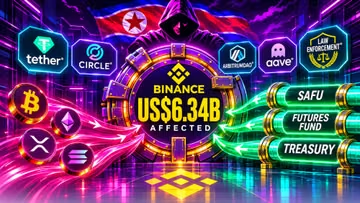
Binance Survived Because It Was Rich Not Secure
Binance replaced US$6.34 billion from its own balance sheet while billions in customer funds fled. The aftermath exposed what the breach did not. DPRK stole at a scale no insurer will cover, frozen funds moved only where centralized issuers held the switches, and attribution became a liability.

Binance Explained Its Record Heist and the Answer Is Worse
Binance explained how North Korea stole US$6.34 billion, and the explanation is worse than the silence it replaced. A fake job interview, a poisoned coding assignment, the exchange’s own AI tooling, and an Ethereum delegation feature let PRESSURE CHOLLIMA drain wallets after withdrawals were frozen.

DarkBlinders Shows Why Threat Actor Naming is a Hall of Mirrors
A fake job from Dubai Airports, a video app that never works, and a gigabyte gone from a Kurdish government cloud. One Iran-nexus espionage operation carries seven vendor names, runs its command-and-control through GitHub, and keeps collecting in the gap between what the industry can see and prove.

FBI Names North Korea as the Thief but Binance Still Cannot Explain the Theft
The FBI has formally named North Korea for the US$6.3 billion Binance theft, the largest in history, confirming an attribution the tradecraft already pointed to. One question is answered. How the attacker turned Binance’s own signing systems against it is not.

Tomorrow’s Encryption Is Already Protecting North Korean Malware
NIST built ML-KEM to protect the world’s data from a future quantum computer. North Korea’s Lazarus found an advantage in the present, running the same post-quantum mathematics inside operational malware before most enterprises have migrated. The standard did not fail. It worked for the wrong side.

North Korea Drained Binance of US$6.3 Billion in a Mere Twenty Minutes
North Korea stole US$6.3 billion from Binance in roughly twenty minutes, the largest cryptocurrency theft in history. No private key had to leak. The attacker seized the machinery turning Binance’s intent into valid signatures, and ten blockchains moved as one.

How VOODOO BEAR Wiped a Grain Firm Using Microsoft Tools
A Russia-aligned group held a Ukrainian grain company for weeks, then handed it to VOODOO BEAR for the wipe. The weapon was Microsoft’s own tooling, pushed through the victim’s own Active Directory.