

Latest Intelligence

North Korean Front Pitches Construction Through a Deepfake
Silent Push found a North Korean remote worker behind The Great House, a Virginia builder registered from a leaked list of IT worker emails, wearing a live deepfake on client calls. The IT worker scheme now targets construction buyers never told to look, and checks costing nothing still beat it.

Windows Reset Runs the RAT It Was Meant to Remove
The Overlord RAT hooks Reset this PC, so the cleanup meant to remove it runs it instead, and killing it crashes the machine. Talos ties UAT-12643 to North Korea at low confidence, yet every overlap is public code. I weigh three hypotheses and find an eCrime threat actor fits the evidence best.

Intelligence Brief: Equinor Under Cyber Attack, an AI Vendor Breach at Uber, and Bugged Hardware Wallets
Equinor discloses an ongoing cyber attack on its IT systems, stolen Fireworks AI credentials expose license data on 149,346 people at Uber, and Trezor finds cellular implants in wallets sold by CryptoBilis. Plus GitDoor, GraphDoor, Trigram, and an alleged INC and Lynx affiliate's extradition.

Seizing North Korea's Binance Loot Starts a Fight Over Who Gets Paid
The Justice Department won court authority over US$1.2 billion stolen from Binance, but North Korea's loss is not yet Binance's gain. Three legal paths point at the same money, and the unpublished forfeiture theory decides which one wins, while US$2.8 billion sits in addresses linked to the theft.

North Korea Is Headhunting the Engineers Who Build Ukraine’s Drones
North Korea is sending fake recruiters after the engineers building Europe’s drones while poisoning the open-source code they rely on. Russia already teaches Pyongyang mass production at Alabuga, so why steal from Europe? Five hypotheses, an ally under surveillance, and the doors Europe keeps open.

North Korea Is Sitting on US$3 Billion Nobody Can Freeze
Binance has repaid its customers, but around US$3 billion stolen by North Korea still sits in bitcoin and ether no issuer can freeze. Automated laundering, a Polygon hard fork proposal, terrorism judgment creditors, and stalled sanctions now decide whether Pyongyang ever profits from the theft.
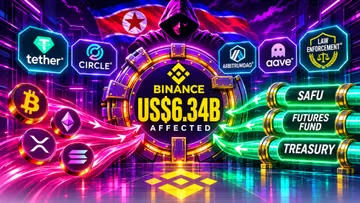
Binance Survived Because It Was Rich Not Secure
Binance replaced US$6.34 billion from its own balance sheet while billions in customer funds fled. The aftermath exposed what the breach did not. DPRK stole at a scale no insurer will cover, frozen funds moved only where centralized issuers held the switches, and attribution became a liability.

Binance Explained Its Record Heist and the Answer Is Worse
Binance explained how North Korea stole US$6.34 billion, and the explanation is worse than the silence it replaced. A fake job interview, a poisoned coding assignment, the exchange’s own AI tooling, and an Ethereum delegation feature let PRESSURE CHOLLIMA drain wallets after withdrawals were frozen.

FBI Names North Korea as the Thief but Binance Still Cannot Explain the Theft
The FBI has formally named North Korea for the US$6.3 billion Binance theft, the largest in history, confirming an attribution the tradecraft already pointed to. One question is answered. How the attacker turned Binance’s own signing systems against it is not.

Tomorrow’s Encryption Is Already Protecting North Korean Malware
NIST built ML-KEM to protect the world’s data from a future quantum computer. North Korea’s Lazarus found an advantage in the present, running the same post-quantum mathematics inside operational malware before most enterprises have migrated. The standard did not fail. It worked for the wrong side.