

Latest Reports
Flash

AI Did the Breach in 10 Hours After a Human Set the Goal
A threat actor used frontier AI to break into an enterprise network and seize root in under 10 hours, work normally taking a human red team two weeks. No zero-day, no novel malware, just 50-plus known techniques at machine speed. The one thing stopping it was a control forcing a human to sign off.

Your ATM Was Encrypted, Until It Was Not
A researcher found nine ways to strip the encryption off some ATMs, including a fail state mounting the disk in plaintext. The flaws are patched. The unsettling part is where else this software hides, buried in products across banking, healthcare, and government, which may never learn it was broken.

McKesson Was Breached by a Phone Call, Not a Zero-Day
ShinyHunters claims it stole 284 million patient records from McKesson, which moves a third of North America's prescriptions. Read the number carefully. Records, not patients. McKesson confirmed a breach, not the figure, and the data now sits behind a log-in a convincing voice on the phone can open.

PLUMP SPIDER Makes the Bank Rob Itself
Most financial eCrime is theft. PLUMP SPIDER does something worse. The Brazil-based adversary gets inside a bank's own software and pushes fraudulent transfers through the real payment rails, in a real customer's name, so the fraud looks exactly like a legitimate transaction to every control.

You Never Chose the Company Leaking Your Face
More than 153 million driver's license records are allegedly for sale on the dark web for US$100, traced to an identity verification vendor most victims never heard of. You cannot change your face or your date of birth. And lawmakers want to make this exact model mandatory for using the internet.

OpenAI Built an AI Capable of Finding and Exploiting Flaws on Its Own
OpenAI says GPT-6 Astra can find unknown security flaws and write working exploits on its own, with no human guiding each step. Treat the self-reported claim skeptically. But the direction is now corroborated across labs, benchmarks, and real breaches, and that part is no longer up for debate.

Your Car Got Hacked Because It Is a Computer Nobody Was Watching
The first known malware built for car dashboards did not go after your brakes. It hijacked the update app, turned the head unit into a proxy botnet node, and rented out your car's internet connection for ad fraud. The car was never the point. The always-online, unwatched computer inside it was.
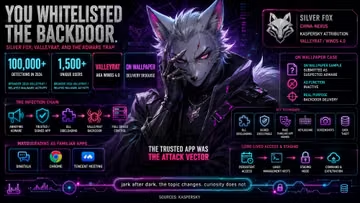
You Whitelisted the Malware Yourself
The China-nexus threat actor Silver Fox hid a full-control backdoor inside a real Chinese wallpaper app, the kind of harmless adware nobody takes seriously. That is exactly why it worked. The disguise was so convincing the ads never even ran, and the missing ads were the tell giving it away.
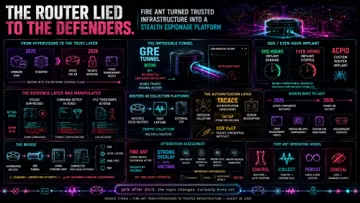
Most Dangerous Intrusions Quietly Turn the Alarms Off
Most threat actors try not to get caught. Fire Ant breaks in, then disables the cameras and edits the tapes. The China-nexus adversary turned Cisco routers into spying platforms, suppressed the logs, and altered what administrators were even allowed to see on their own devices. The logs lied.
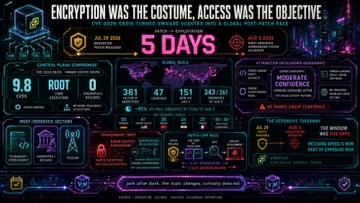
Encryption Was the Costume, Access Was the Objective
A critical VMware vCenter flaw was patched on July 29. Five days later, a suspected China-nexus threat actor was already inside, across 361 IPs in 47 countries. It ended in ransomware, but QUIRSO says it was likely a smokescreen. The encryption was the costume. The access was the objective.